Public Domain // Wikimedia Eatables

50 famous paintings and the stories behind them

A picture is worth a thousand words, and like texts, fine art is often meant to be "read" through critical deconstruction. Paintings tin exist far more complicated than they announced at first glance and hard to decipher if the viewer doesn't speak the aforementioned tongue. Iconography—the symbolic language of a given work of fine art—can be sophisticated and circuitous, reflecting the collective consciousness or drawn from the artist'southward personal experience. Why would someone eschew the written word in favor of pigment and sail? 20th-century American artist Edward Hopper appears to have had the answer. "If I could say it in words," he said, "there would be no reason to paint."
The stories told by works of art—and about them—are, quite literally, the stuff of novels. Johannes Vermeer's "Daughter with a Pearl Earring" inspired the novel of the aforementioned proper name by author Tracy Chevalier. The book was later turned into a film starring Scarlett Johansson. Most 40 years afterward Irving Stone wrote his biographical account of the life of Michelangelo, Dan Brown's "The Da Vinci Code" turned the life and work of the Renaissance master into a romp through the preceding millennia.

September 2019 heralded the wide cinematic release of the latest exponent of the genre: "The Goldfinch," based on Donna Tartt'southward Pulitzer Prize-winning novel. The volume centers around the fictionalized theft of Dutch artist Carel Fabritius' eponymous painting after an explosion rocks New York's Metropolitan Museum of Art. Ironically, Fabritius died in a devastating gunpowder explosion in 1654, presently after completing his most memorable piece of work. The success enjoyed past Tartt'south book elevated "The Goldfinch" to stone star status, mobbed by crowds determined to catch a glimpse of the tiny bird tethered by a delicate concatenation. [Note: Fabritius' painting is non featured in Stacker's gallery.]

Stacker curated this list of some of the world'due south about famous images and the fascinating stories behind them. Curlicue through the listing and find out which paintings scandalized Paris, were looted past the Nazis, and inspired a striking Broadway musical.

You lot may also similar: The 51 women who take won the Nobel Prize

i / 50

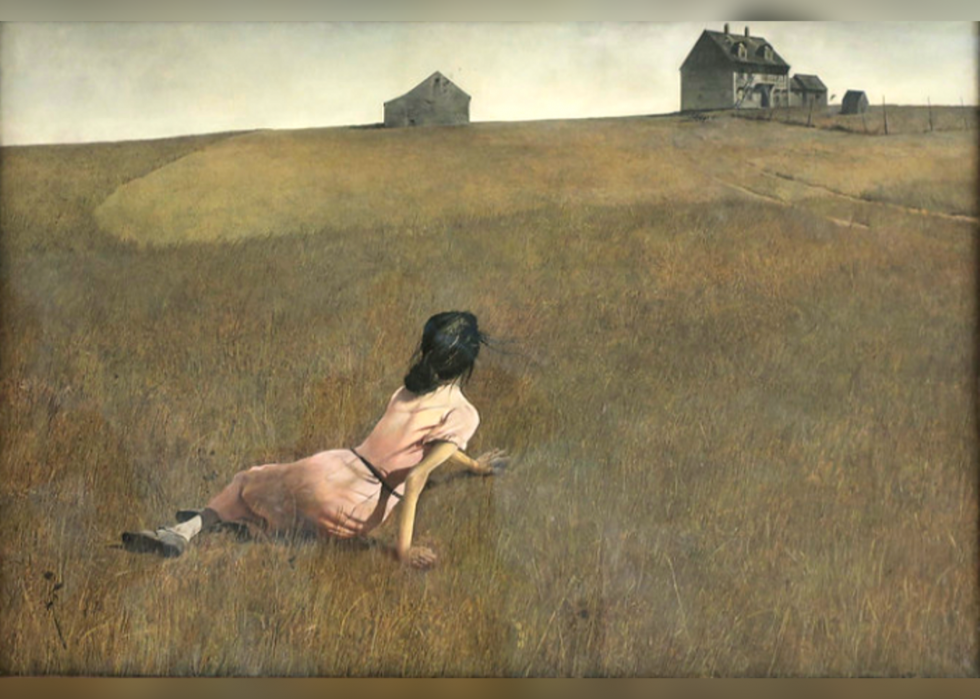
Christina's World

- Creative person: Andrew Wyeth
- Year: 1948

"Christina's Earth" continues to fascinate more than than seventy years after information technology was first painted. The faceless woman lying on the basis was Anna Christina Olson, the neighbour and muse of Pennsylvania creative person Andrew Wyeth. While the painting has all the hallmarks of a pastoral, Olson'south pose is not one of romantic languor; she suffered from a muscle-wasting disorder—possibly Charcot-Marie-Tooth disease—and was known to drag herself beyond the family homestead.

ii / 50

Public Domain // Wikimedia Commons

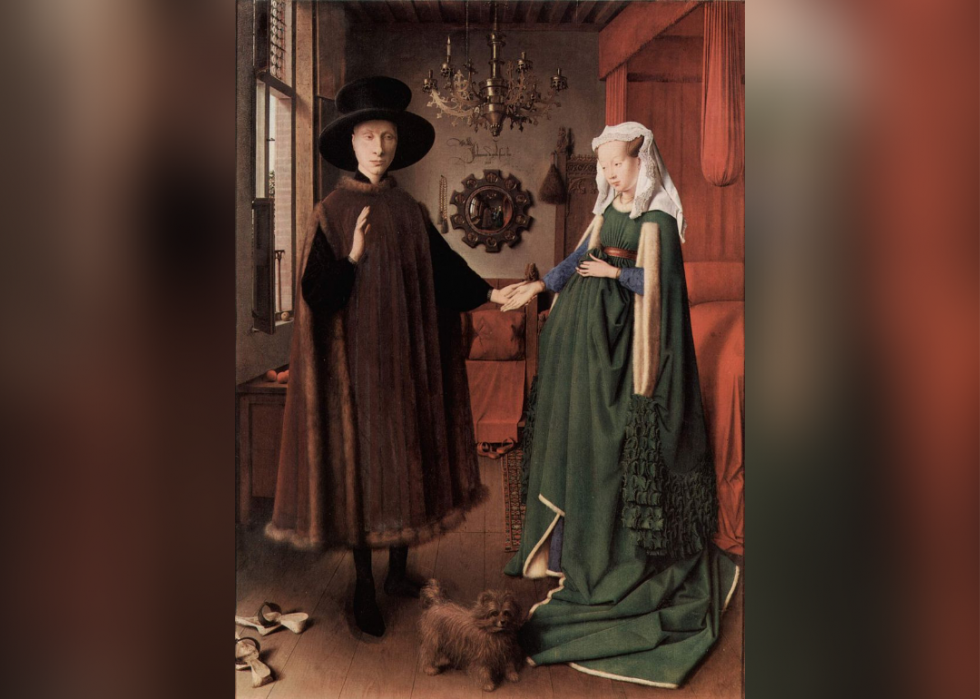
Arnolfini Portrait

- Artist: Jan van Eyck
- Year: 1434

Painted by Dutch chief January van Eyck, this early on Netherlandish panel painting is shrouded in symbolism. The elegantly dressed couple are thought to be Giovanni di Nicolao di Arnolfini, and his wife, Costanza Trenta, wealthy Italians living in Bruges. The unusual composition begs several questions. Does the painting celebrate the couple's wedding, or commemorate some other event, such equally a shrewdly negotiated marriage contract? Was the bride pregnant, or simply dressed in the latest fashion? And what are the mysterious figures depicted in the convex mirror? The unorthodox placement of van Eyck's signature directly above it suggests one of the men may be the artist himself.

3 / l

Public Domain // Wikimedia Commons

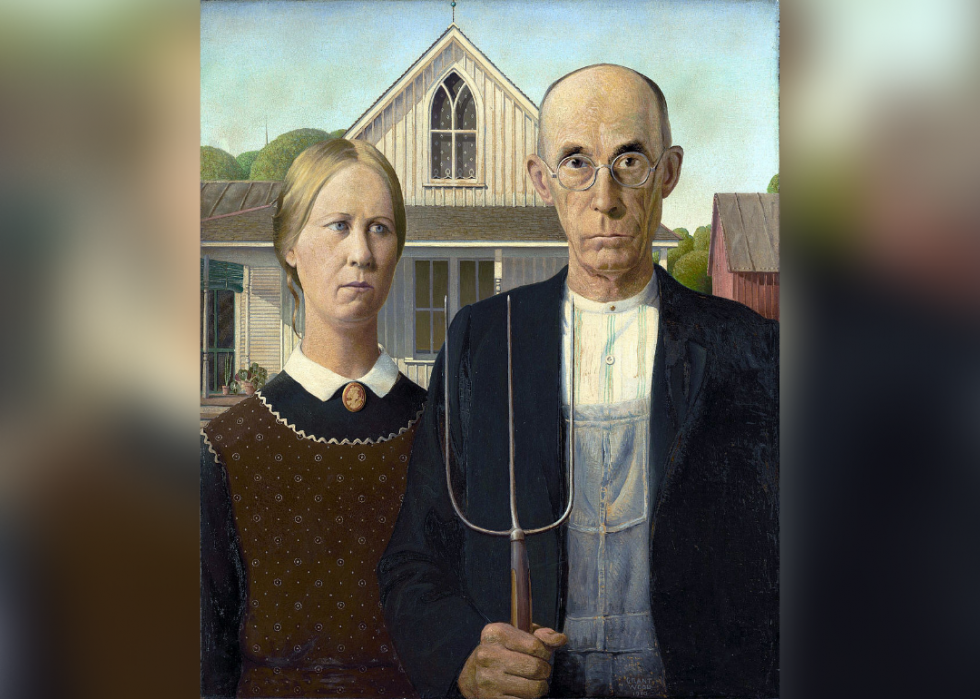
American Gothic

- Artist: Grant Wood
- Year: 1930

Grant Wood spent years searching for inspiration in Europe. The work that would make him famous, nevertheless, was painted after his return to the heartland. A national icon and leading exponent of regionalism, "American Gothic" depicts what appears to be a Depression-era farmer and his weathered wife. Grant intended the couple to stand for father and daughter; in reality, they were neither. The man holding the pitchfork was Wood's dentist, Byron McKeeby, flanked by the artist's sis, Nan Wood Graham.

4 / 50

Public Domain // Wikimedia Commons

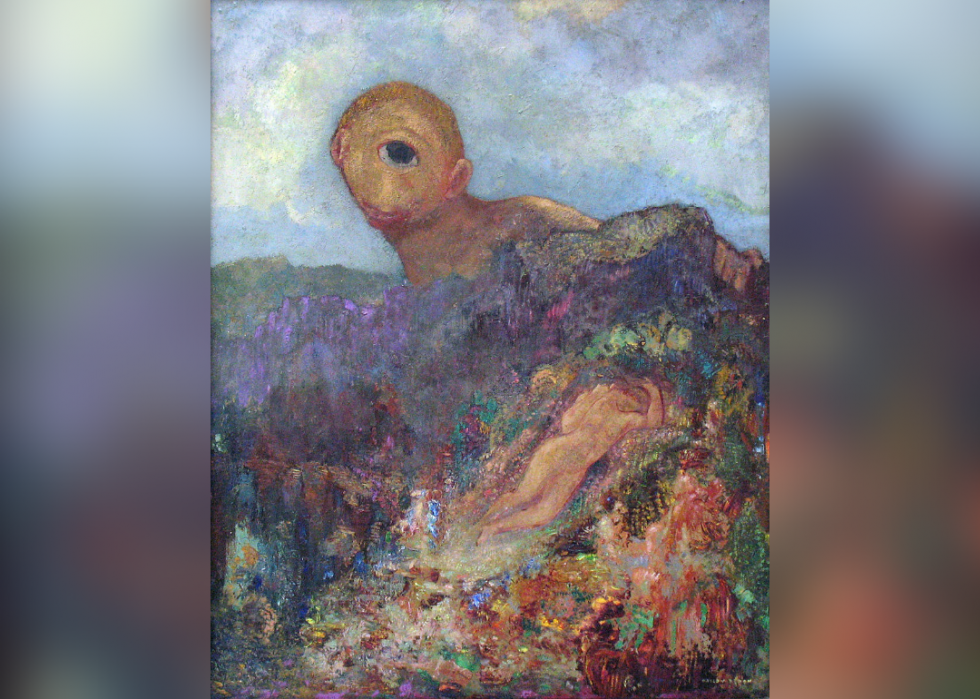
Cyclops

- Artist: Odilon Redon
- Year: 1914

For those not familiar with the finer points of Greek mythology, the dream-similar subject of Odilon Redon'southward "Cyclops" may not exist easily identifiable. Polyphemus, the giant that is sporting the solitary eyeball, peers over a rocky outcropping at the object of his want—the nymph Galatea. Derived from Homer's "Odyssey," the tale was a popular trope amid French symbolists, including Redon'southward contemporary, poet and painter Gustave Moreau.

5 / 50

Public Domain // Wikimedia Eatables

Death of Marat

- Artist: Jacques-Louis David
- Yr: 1793

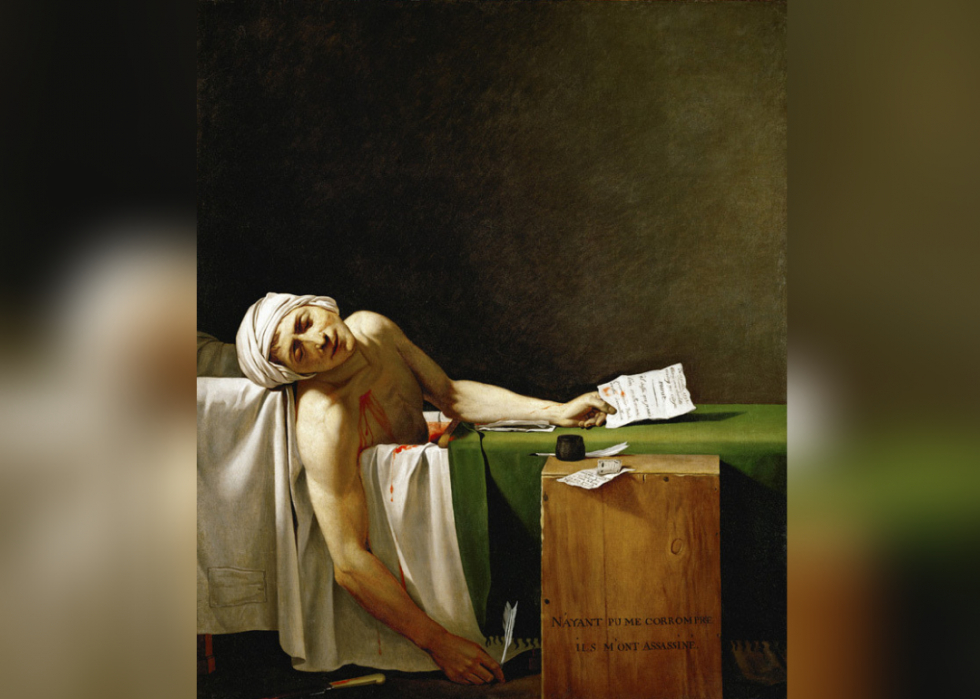
The pallid figure bleeding out in Jacques-Louis David's 1793 neoclassical masterpiece is none other than Jean-Paul Marat, the French revolutionary famously stabbed to death in the bath by political adversary Charlotte Corday. David gravitated toward radical politics, aligning himself with the Jacobin ideologies of Marat and Maximilien Robespierre. In post-revolutionary France, he rose to the position of courtroom painter under Napoléon Bonaparte.

6 / 50

MatthiasKabel // WikimediaCommons

Frescoes, Villa of the Mysteries

- Artist: Unknown
- Yr: c. start century B.C.

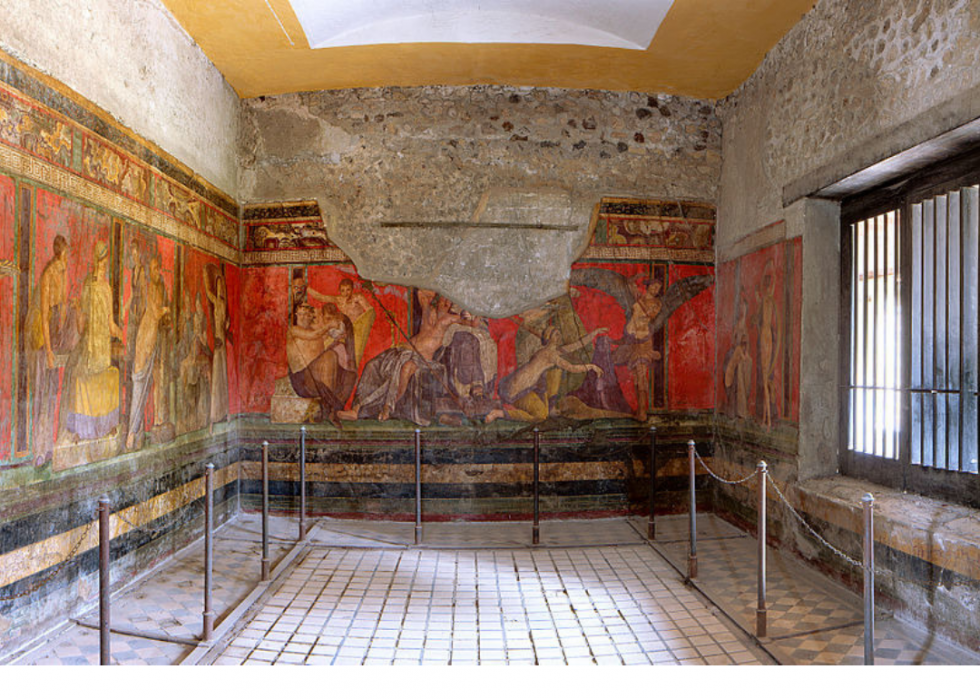
In 1909, archeologists working in the ancient Roman city of Pompeii unearthed a villa buried nether 30 anxiety of volcanic ash. Preserved inside was a room, measuring approximately 225 square feet, containing a series of cute nevertheless baffling frescoes. The images draw more than than two dozen, life-size figures. At the center of the activity is a clothesless woman, shown flogged in one scene while dancing and playing the cymbals in another. Most scholars concur that the cycle represents a Dionysian initiation cult.

7 / 50

Public Domain // Wikimedia Commons

Daughter with a Pearl Earring

- Artist: Johannes Vermeer
- Year: 1665

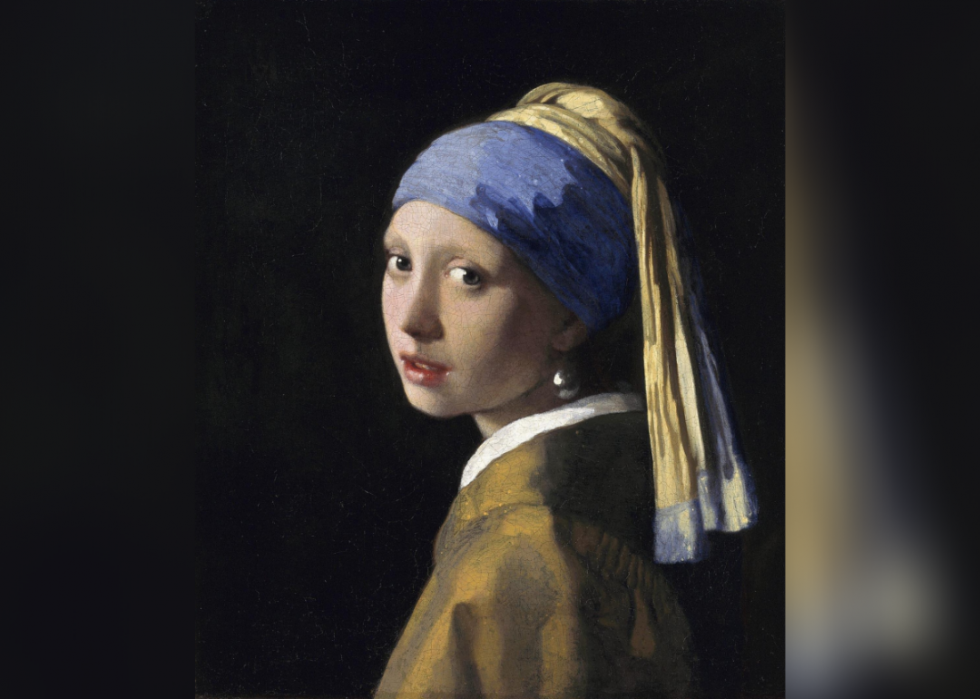
A masterpiece of the Dutch Golden Age, Vermeer's "Girl with a Pearl Earring" has transfixed viewers with her wistful gaze ever since the painting resurfaced in the belatedly 19th century. Little, however, is known almost the young woman who modeled for the portrait. It has been suggested that the daughter was Vermeer's daughter or mistress. While this may be the instance, the image wasn't intended to represent an actual person. The turban worn past the sitter indicates that the piece was intended equally a "tronie," an idealized epitome cloaked in exotic clothing.

8 / 50

Public Domain // Wikimedia Eatables

Le Déjeuner sur fifty'herbe

- Creative person: Edouard Manet
- Year: 1863

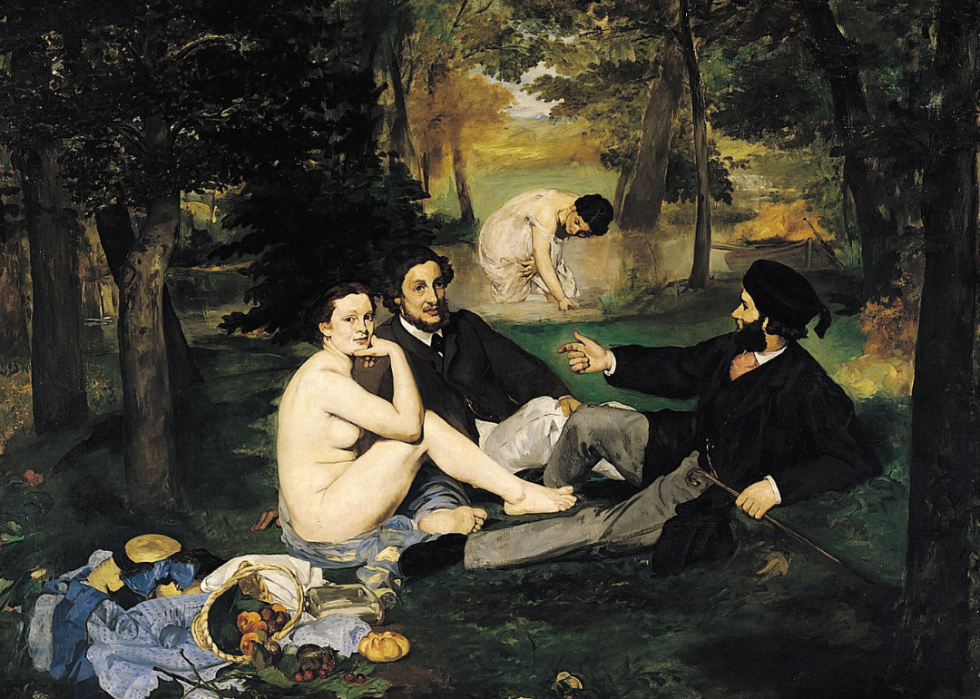
Edouard Manet'south sensational "Le Déjeuner sur l'herbe" ("The Luncheon on the Grass") scandalized 19th-century Paris, not for its stark nudity, but because information technology broke with a long-standing tradition of depicting nudes in classical settings. The Paris Salon rejected the painting, declaring it obscene. Victorine-Louise Meurent, the naked woman staring unapologetically at the viewer, was assumed by many to be a local prostitute; she was actually a sought-afterward Parisian artist's model and an accomplished painter in her own right.

9 / 50

Public Domain // Wikimedia Commons

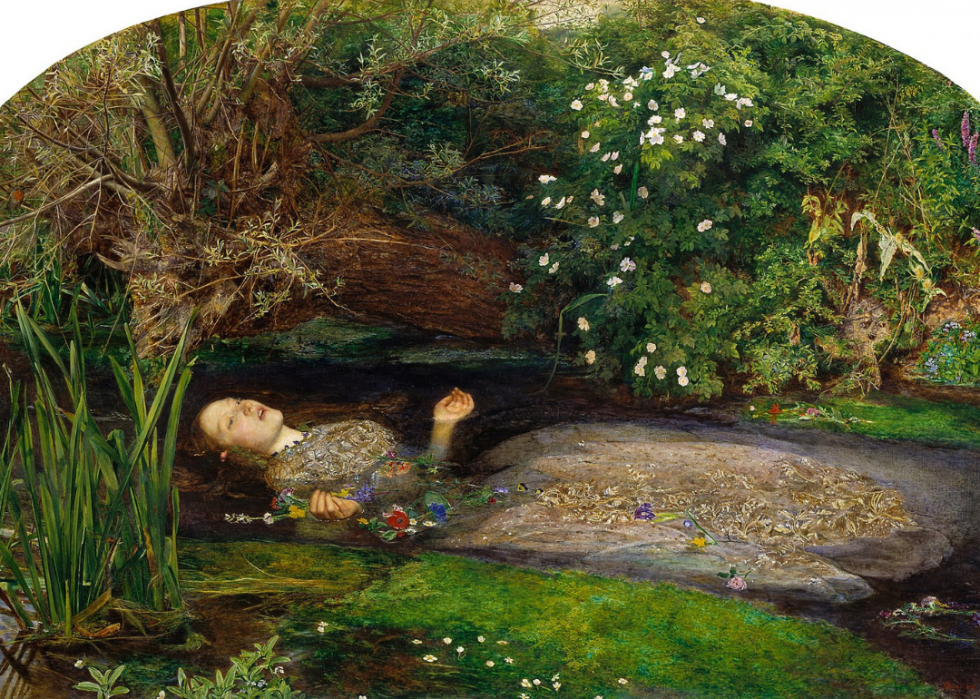
Ophelia

- Artist: Sir John Everett Millais
- Year: 1851-52

Pre-Raphaelite John Everett Millais, in true Pre-Raphaelite fashion, painted direct from life whenever possible. Much of the exuberant foliage found in "Ophelia" can be constitute in Shakespeare's "Hamlet" and was painted en plein air. Millais, however, didn't bailiwick his 19-year-old model, Elizabeth Siddall, to the elements; she reportedly posed for the creative person in a bathtub full of water in his London studio.

ten / fifty

Public Domain // Wikimedia Commons

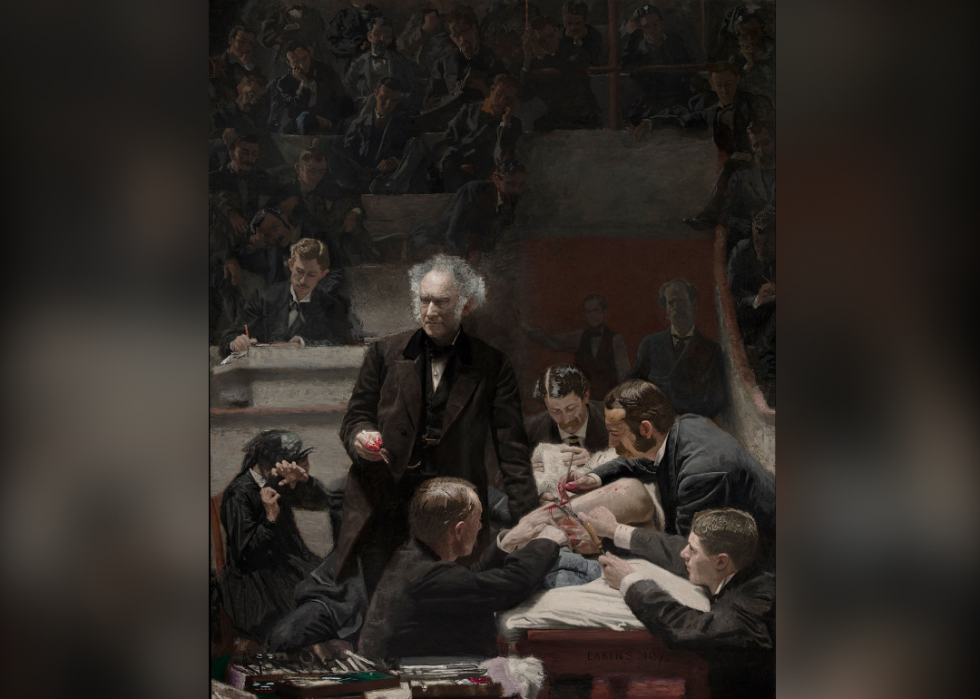
The Gross Dispensary

- Artist: Thomas Eakins
- Year: 1875

Philadelphia artist Thomas Eakins spent a year working on "The Gross Clinic," which he painted specifically for his hometown'southward 1876 Centennial Exhibition. The closely observed work depicts Dr. Samuel Gross and associates operating on a patient'due south leg. A stricken woman hiding her face from the open up gash has been traditionally identified as the faceless patient's mother. Sitting behind Gross, to the right of the painting is a self-portrait of the artist. Jurists, shocked by the gory realism, rejected the work, which was eventually housed in a reconstruction of a U.Due south. Ground forces Post Hospital.

11 / fifty

Public Domain // Wikimedia Commons

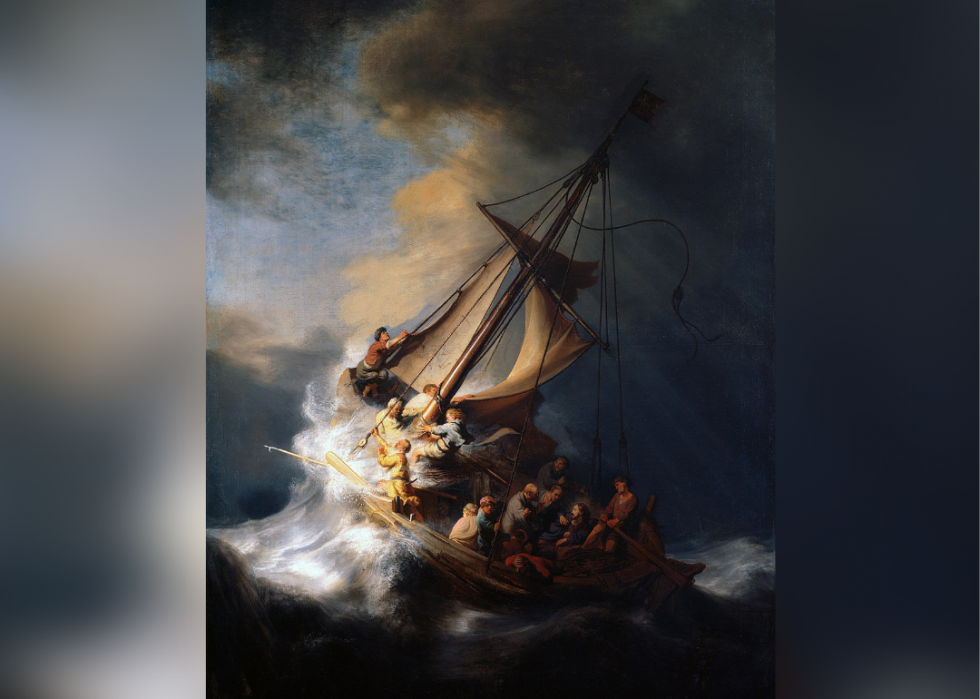
Christ in the Tempest on the Sea of Galilee

- Artist: Rembrandt van Rijn
- Year: 1633

Purchased by art enthusiast Isabella Stewart Gardner in 1898, Rembrandt's only painted seascape occupied a identify of prominence in the Boston museum Gardner erected in her name until March eighteen, 1990, when it was stolen, along with over a dozen important works valued at approximately half a billion dollars. Although the finger has frequently been pointed at now-deceased Boston career criminal Whitey Bulger, the thieves have never been defenseless, and the whereabouts of the missing artwork remains unknown.

12 / l

Public Domain // Wikimedia Commons

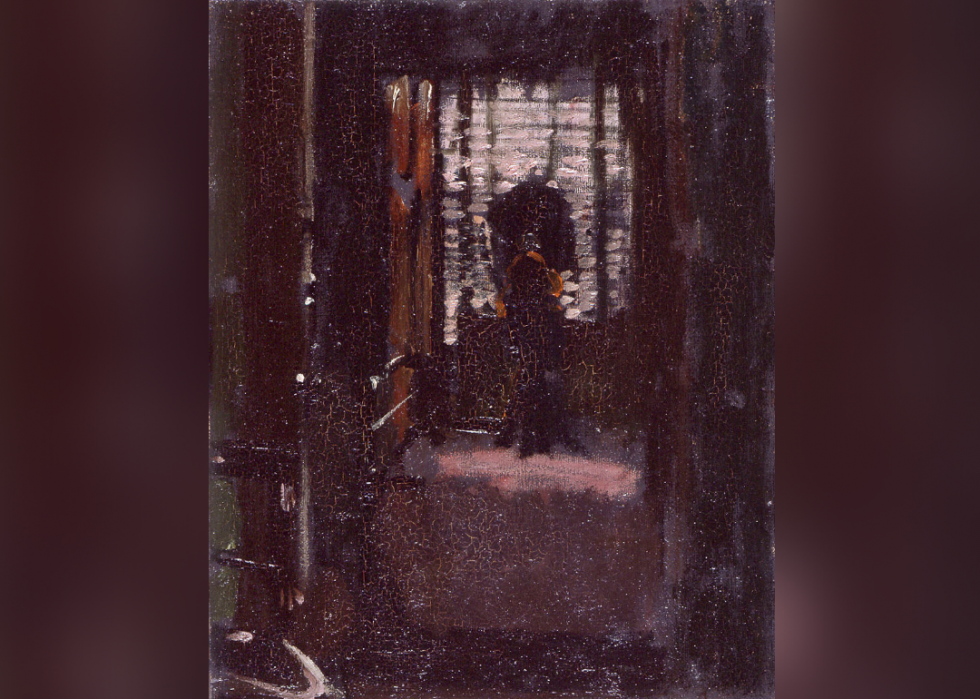
Jack the Ripper's Bedroom

- Creative person: Walter Sickert
- Twelvemonth: 1908

Walter Sickert, noted for his moody portraits and dimly lit domestic interiors, may have harbored a secret darker than his paintings. It has been argued that disconcerting works such as "Jack the Ripper'due south Bedroom" and "The Camden Town Murder" may reflect some connexion between the artist and the grisly Whitechapel butcher—either as an accomplice or the murderer himself.

13 / fifty

Public Domain // Wikimedia Commons

Self-Portrait with Bandaged Ear

- Artist: Vincent van Gogh
- Yr: 1889

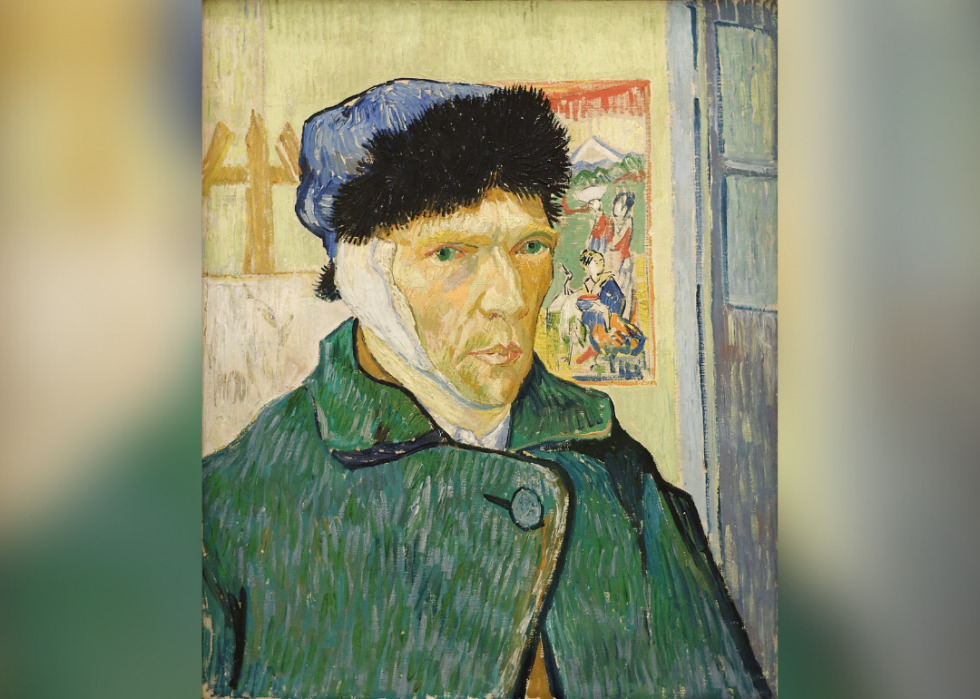
Vincent van Gogh is famous for having severed his own ear; the strained relationship with fellow post-impressionist Paul Gauguin that precipitated the artist'southward cocky-mutilation is not nigh as well known. Van Gogh spent 1888 working in the S of France and was joined in October of that year by Gauguin. Their friendship deteriorated, and van Gogh didn't react well to the news of Gauguin's impending departure. The troubled artist cut off his ear, wrapped in paper, and reportedly gave information technology to a local prostitute for safekeeping. "Self-Portrait with Bandaged Ear" depicts van Gogh in his studio, with the right side of his caput wrapped in cloth. In fact, information technology was a portion of van Gogh's left ear that was removed, with the inconsistency in the painting arising from the inverted reflection perceived by the artist while gazing in the mirror.

fourteen / 50

Laura Estefania Lopez // Wikimedia Commons

Guernica

- Artist: Pablo Picasso
- Year: 1937

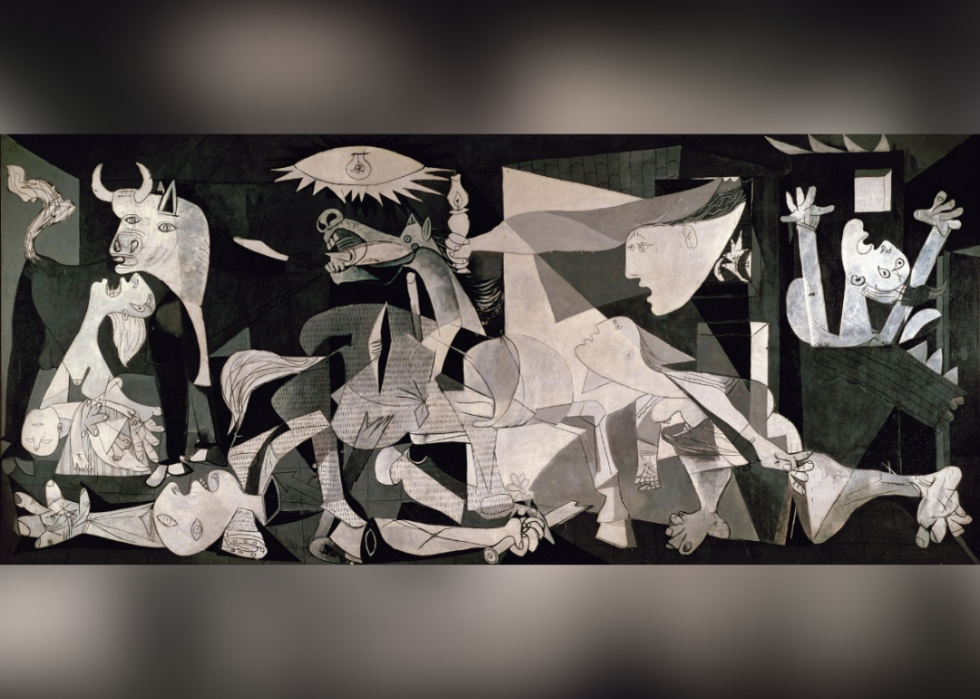
An enormous, shifting mass of distorted, agonized figures, Pablo Picasso's "Guernica" was the creative person's personal response to the horrific bombing inflicted by the Germans on the tiny Basque town in 1937. Exhibited at the Exposition Internationale des Arts et Techniques dans la Vie Moderne the same year, the painting was a plea for peace in an historic period of roughshod conflict—both the Castilian Civil War and the dawn of World War Two. Picasso expressly forbid the exhibition of his masterwork in Spain until the land became a republic. While his homeland never met that demand, the painting was seen—behind bullet-proof drinking glass—at the Prada in Madrid in 1981, six years afterward the death of dictator Francisco Franco.

fifteen / 50

Public Domain // Wikimedia Commons

The Scream

- Creative person: Edvard Munch
- Year: 1893

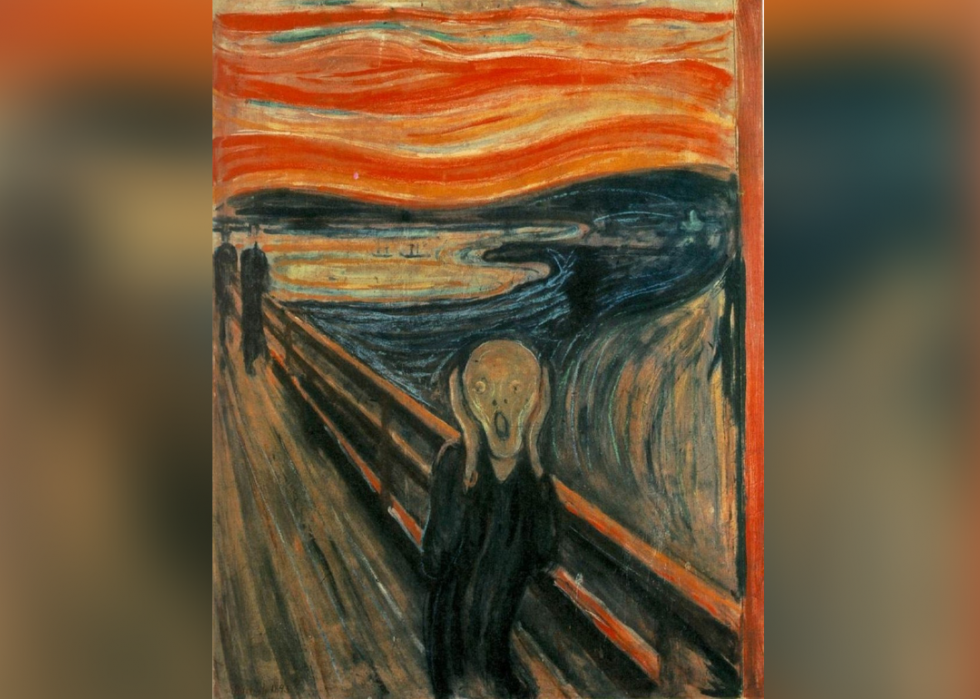
Popularly known equally "The Scream," Norwegian artist Edvard Munch's expressionist masterpiece is frequently interpreted every bit a fundamental response to the excessive pressures of modern life. Originally titled "The Shriek of Nature," the paradigm was created with an entirely different intent, as related by Munch himself, "1 evening I was walking along a path, the metropolis was on one side and the fjord beneath. I felt tired and sick. I stopped and looked out over the fjord—the lord's day was setting, and the clouds turning blood red. I sensed a scream passing through nature; information technology seemed to me that I heard the scream. I painted this motion-picture show, painted the clouds as actual blood. The color shrieked." The iconic painting was stolen from the Oslo National Gallery in 1994; the culprit was apprehended and the painting recovered several months later. Ironically, a 1910 version of "The Scream" was taken in broad daylight from the Munch Museum in 2004. It, too, was eventually recovered despite fears information technology had been destroyed.

16 / 50

Postdif // Wikimedia Commons

2 Tahitian Women

- Artist: Paul Gauguin
- Yr: 1899

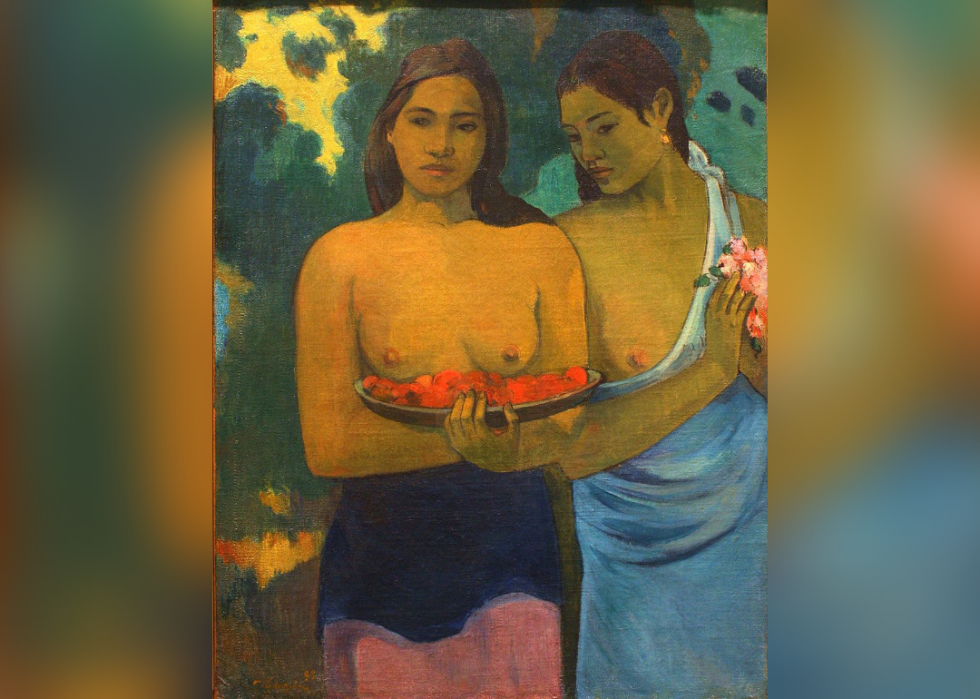
A leading post-impressionist and frenemy of Vincent van Gogh, Gauguin abandoned his wife and children for a hedonistic life in the South Seas. Admired for over a century for his seemingly innocent portraits of Tahitian women, Gaughin was also a syphilitic sexual predator who molested countless young girls in his Polynesian pleasure palace dubbed "The Firm of Orgasm."

17 / l

Public Domain // Wikimedia Commons

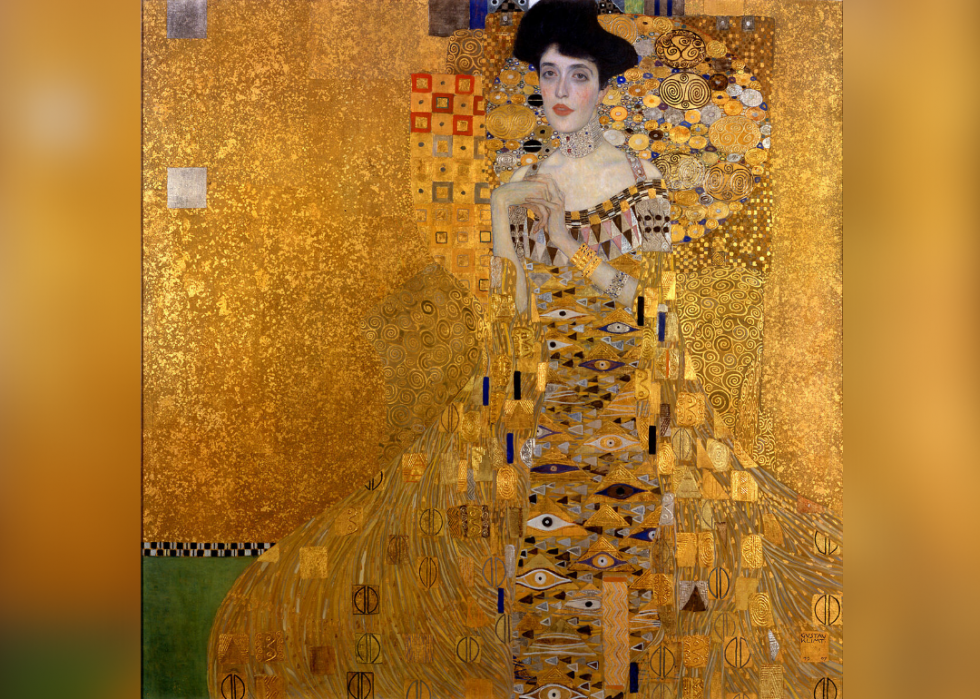
Portrait of Adele Bloch-Bauer

- Artist: Gustav Klimt
- Yr: 1907

One of a handful of paintings seized past the Nazis from the family home of Ferdinand Bloch-Bauer, this glittering portrait by fin-de-siecle artist Gustav Klimt depicts the Viennese sugar magnate'south wife—art enthusiast and social club hostess Adele Bloch-Bauer. After the war, the portrait turned upwards in the land-run Galerie Dais. Maria Altmann, Adele'south niece, spent years fighting for the painting'due south render, finally triumphing in 2006. The incredible story was fabricated into a motion picture, "Woman in Gilded," starring Helen Mirren as Altmann. Both patron and muse, Bloch-Bauer is the only sitter Klimt painted twice.

18 / l

Prof saxx // Wikimedia Commons

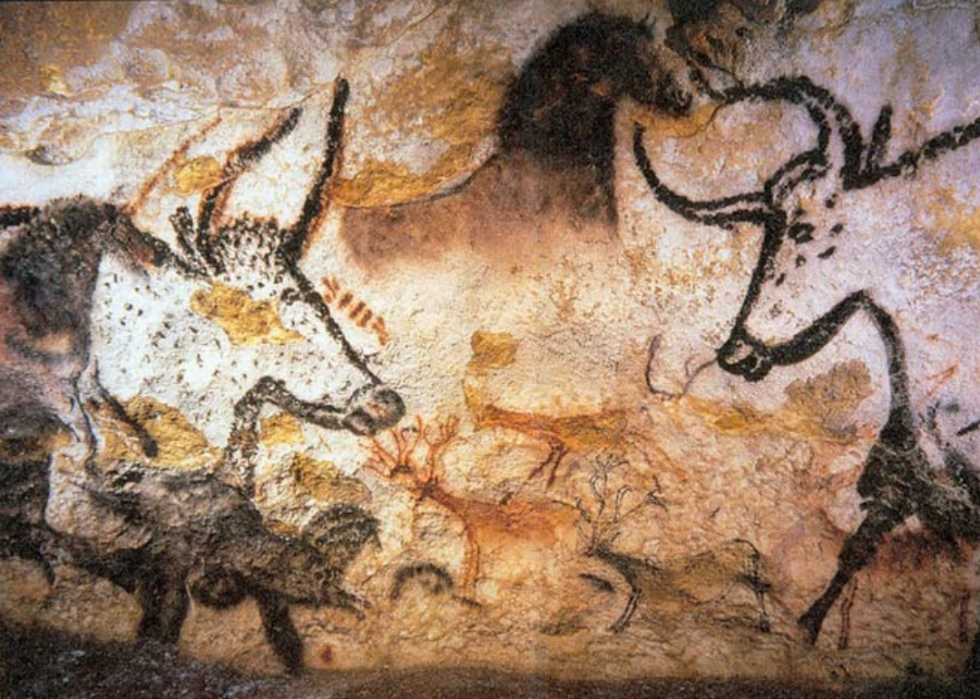
Lascaux Cave Paintings

- Artist: Unknown
- Year: c. 15,000–17,000 B.C.

In 1940, xviii-year-old Marcel Ravidat opened a window to the afar by when he fell into a pigsty while out walking with his dog in the Dordogne region of France. The pigsty led to a cave covered with approximately 6,000 Paleolithic images depicting animals, enigmatic symbols, and a lone human form. The purpose of the paintings, created with mineral pigments and charcoal, is obscure but may be linked to some sort of ceremonial rite.

19 / 50

Public Domain // Wikimedia Eatables

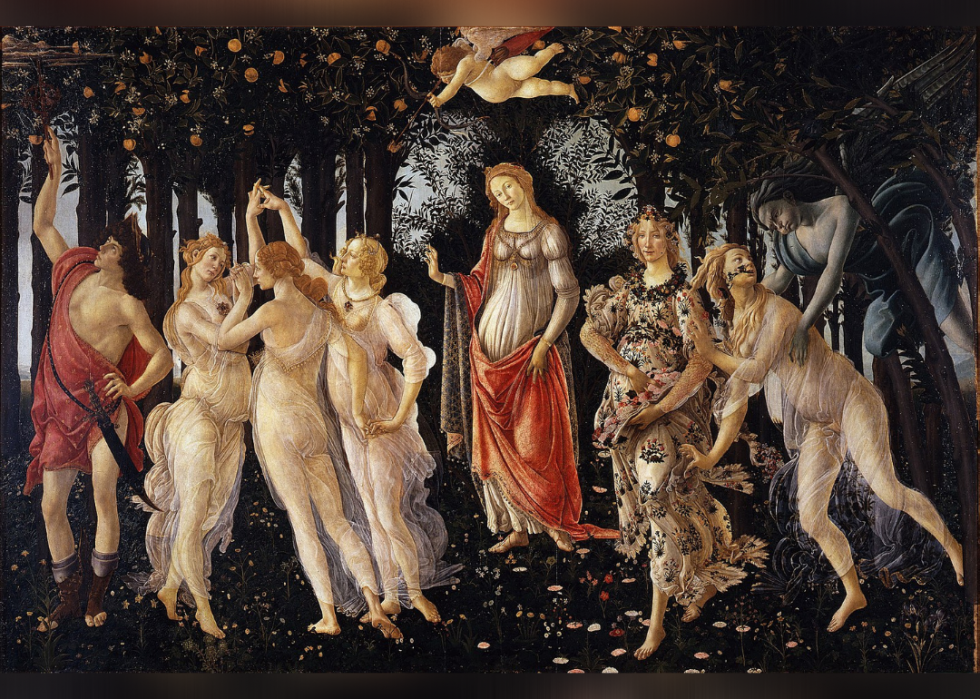
Primavera

- Artist: Sandro Botticelli
- Year: 1477–1482

Christened "Primavera" past pioneering art historian Giorgio Vasari in 1550, Boticelli'due south mysterious masterwork originally lacked a championship. Although its precise meaning remains enigmatic, "Primavera" is an allegorical work inspired by classical mythology, depicting the transformation of the nymph Chloris into Flora, the goddess of spring. Commissioned by a member of the powerful Medici association, information technology has been suggested that figures in the composition were modeled on members of the family unit.

20 / 50

Public Domain // Wikimedia Commons

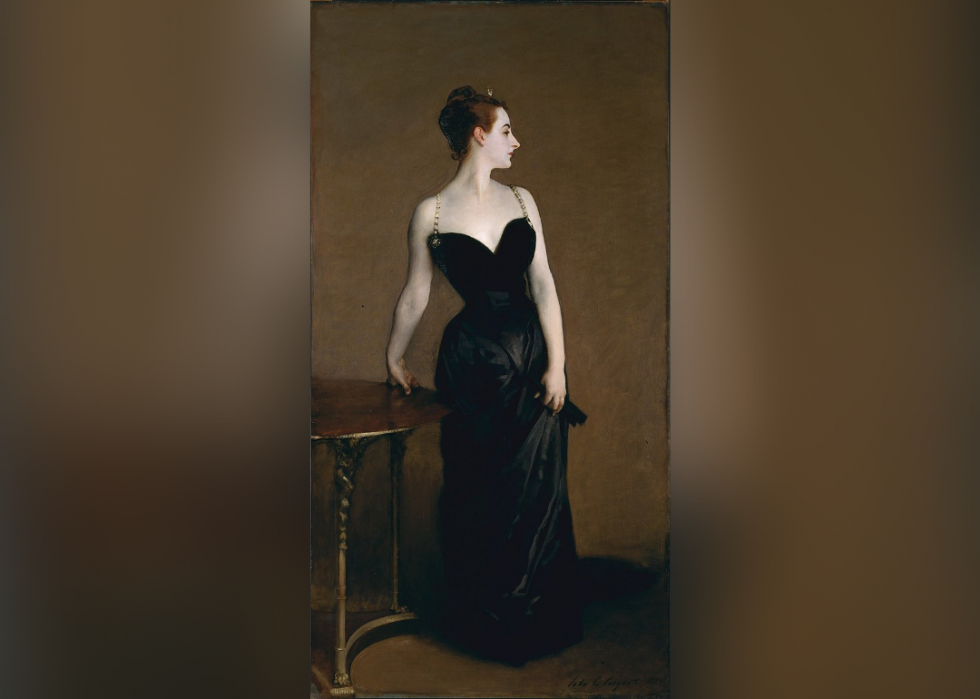
Portrait of Madame X

- Artist: John Vocalizer Sargent
- Year: 1883–84

John Singer Sargent's moody portrait of Virginie Avegno Gautreau, the American wife of a French broker, outraged critics when it was first exhibited at the Paris Salon 1884. Sargent had hoped the portrait would make his career. The painting, however, set off a scandal of such magnitude that Sargent exiled himself to England. What was information technology that had and so offended Parisian high society? While the image'due south overt sexuality was expected for a mythological heroine and tolerable for a prostitute moonlighting as an artist's model, it was downright threatening when practical to a adult female of their own cast.

21 / 50

Don Emmert // Getty Images

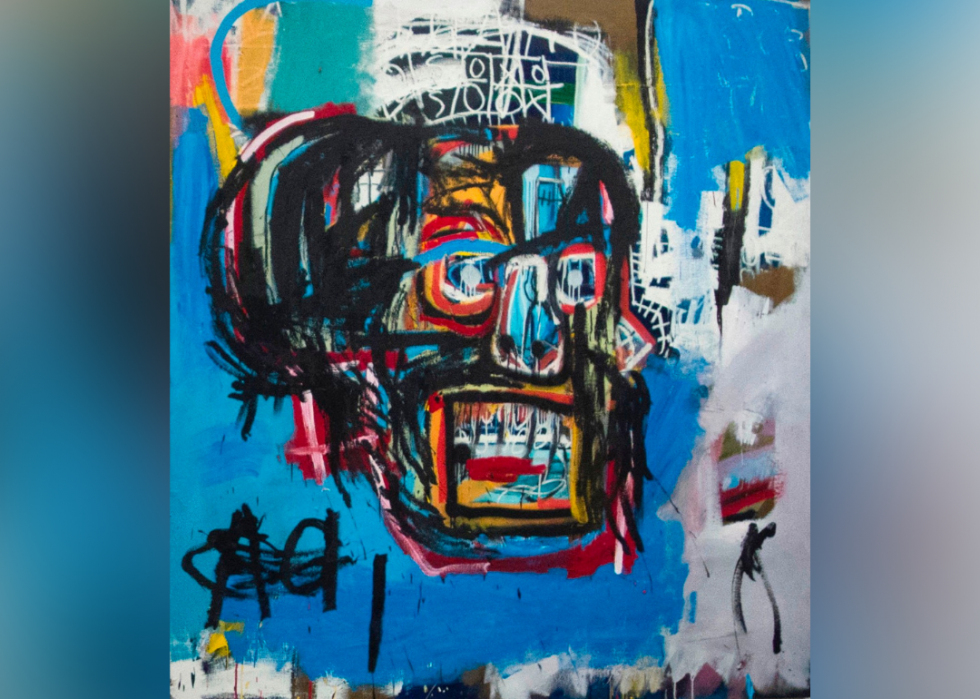
Untitled

- Artist: Jean-Michel Basquiat
- Year: 1982

Jean-Michel Basquiat's meteoric rising from Brooklyn graffiti artist to critically acclaimed painter is the stuff of legend. The youthful Neo-expressionist lived difficult and died at the tender age of 27 from a heroin overdose. In December 2018, one of Basquiat'due south untitled works set a tape at Sotheby's, selling for a $110.5 million. The staggering selling price spurred the owner of another Basquiat painting to have the piece of work authenticated. An ultraviolet light test revealed that the painting included elements drawn by Basquiat in invisible ink.

22 / 50

Public Domain // Wikimedia Commons

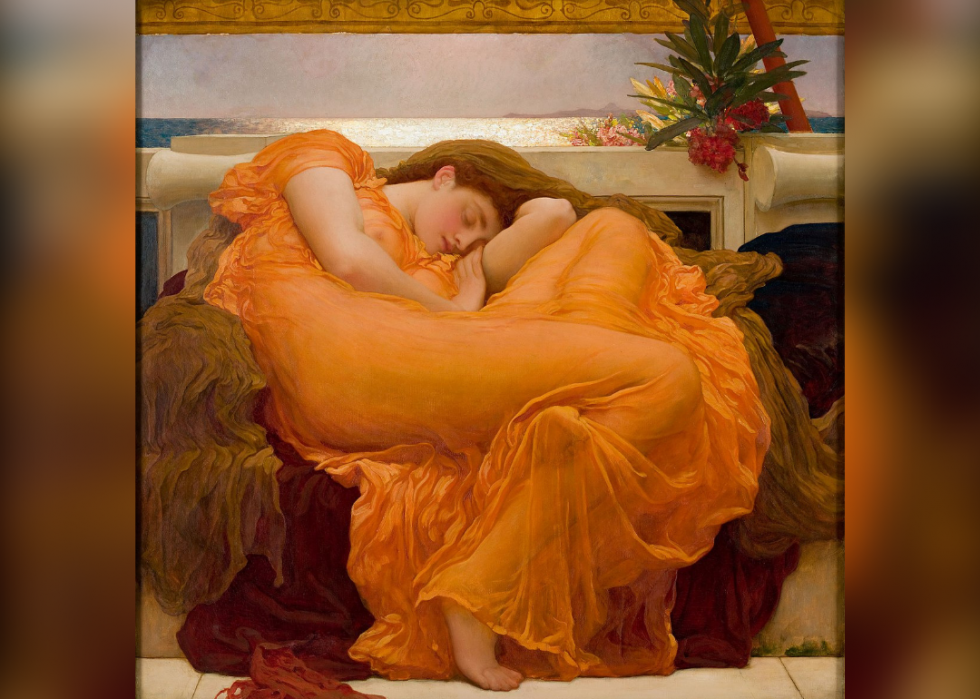
Flaming June

- Artist: Sir Frederic Leighton
- Year: 1895

"Flaming June," of the languid dazzler in the transparent orange clothes, was painted by esteemed British artist Frederic Leighton at the shut of the 19th century. The painting disappeared soon after, just to reemerge in the early 1960s when information technology was supposedly discovered in a chimney by a laborer working at a structure site. Considered highly unfashionable at the time, the painting failed to make reserve when it came to auction. It was acquired soon later on by Puerto Rico's Museo de Arte de Ponce, where it remains to this mean solar day.

23 / l

Public Domain // Wikimedia Eatables

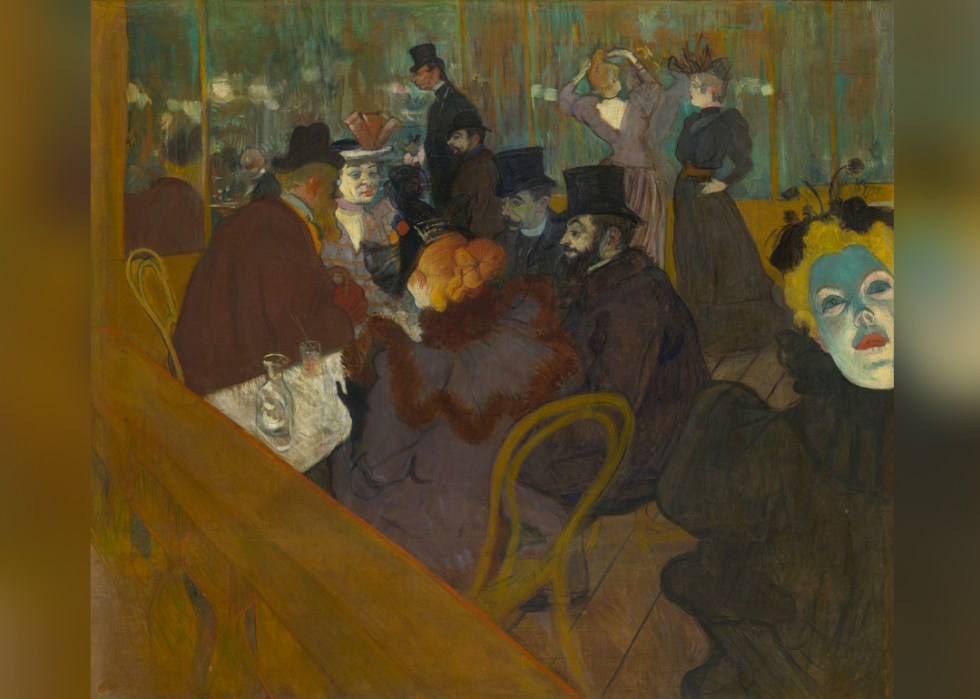
At the Moulin Rouge

- Creative person: Henri de Toulouse-Lautrec
- Year: 1892–95

Born to wealth and privilege, Toulouse-Lautrec abandoned his aristocratic roots in favor of the working-class Montmartre district and its colorful nightlife. The artist appears to accept been affected with a genetic disorder affecting growth and bone development; he walked with a cane and reached an adult superlative of just four anxiety, 8 inches alpine. Taunted for his physical appearance, he self-medicated with booze, notably absinthe. "At the Moulin Rouge" depicts the world in which Toulouse-Lautrec felt most at ease. In improver to entertainers such as red-headed chanteuse Jane Avril and dancer May Milton (with the verdigris-tinted complexion), the piece likewise includes a cocky-portrait of the artist in the company of his cousin, Gabriel Tapié de Céleyran.

24 / fifty

Public Domain // Wikimedia Commons

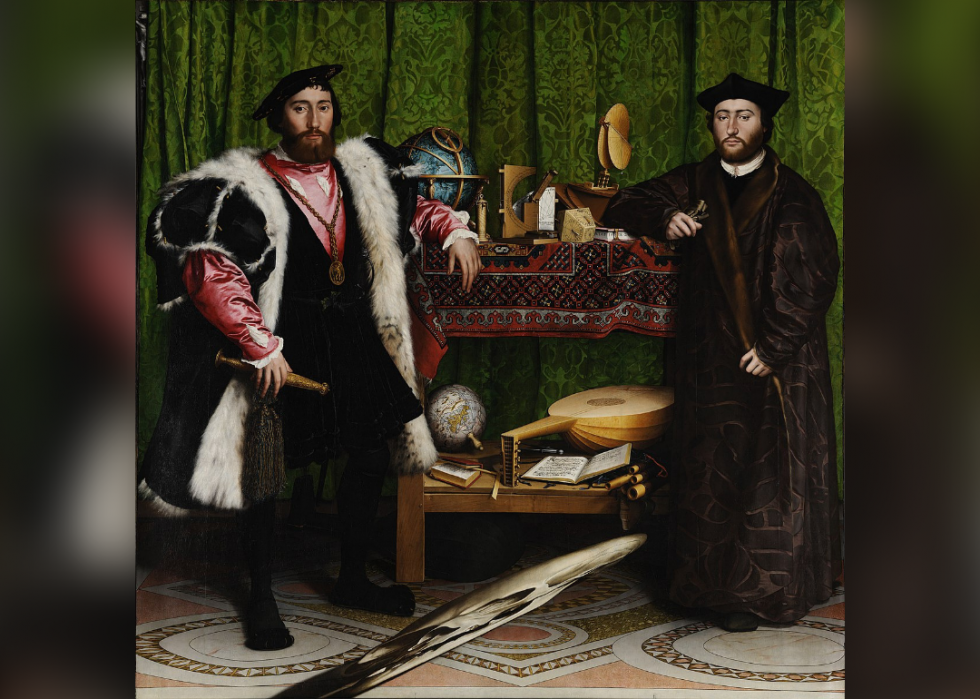
The Ambassadors

- Artist: Hans Holbein the Younger
- Year: 1533

The most in-demand portrait painter of his era, Hans Holbein spent a considerable amount of time at the court of Henry VIII. "The Ambassadors" depicts Jean de Dinteville, the French ambassador to England, and his friend, George de Selve, both in their late 20s; de Selve, the bishop of Lavaur, served as administrator to both the Holy Roman emperor and the pope.

The painting is scattered with allegorical components, including a lute with cleaved strings—maybe symbolic of Henry VIII's break with Rome so that he could divorce Catherine of Aragon and marry his mistress, Anne Boleyn. The blurry, black-and-white object that bisects the bottom of the limerick is, in fact, a human skull, representing mortality. Striking use of anamorphosis, information technology tin only be viewed from an astute angle, forcing observers to view the painting from a variety of perspectives.

25 / 50

Ben Stansall // Getty Images

Daughter With Balloon

- Artist: Banksy
- Year: 2006

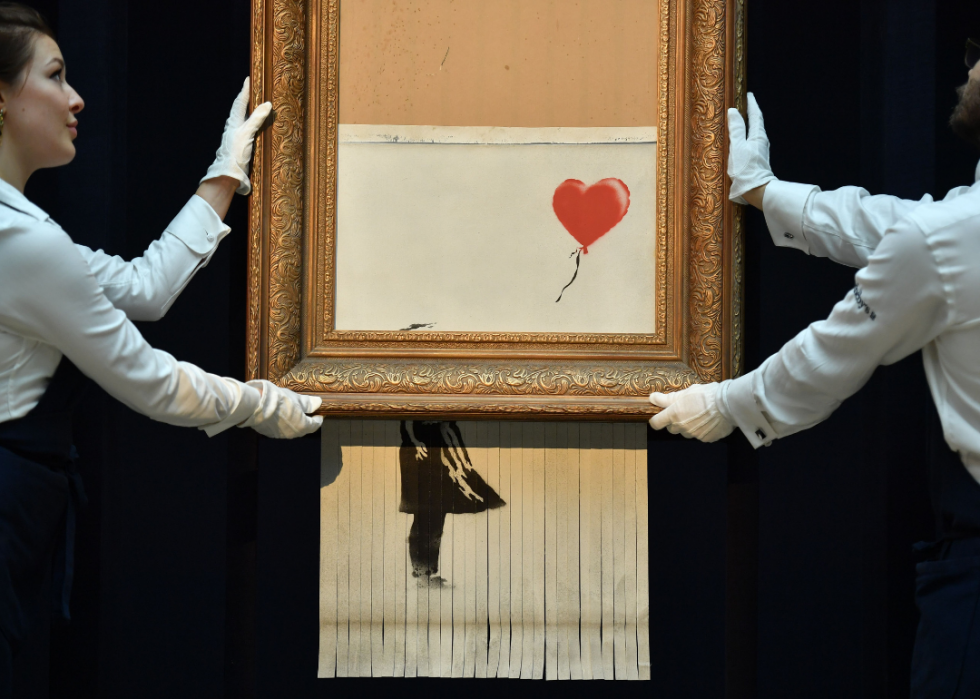
In 2002, the stenciled image of a daughter reaching toward a red, middle-shaped balloon appeared on a staircase leading to London's Waterloo Bridge. Attributed to the elusive artist Banksy, several other examples popped upwardly around London in subsequent years. In 2018, a 2006 version of the painting was auctioned at Sotheby's for the princely sum of $one.4 million, automatically shredding itself past means of a device hidden past the artist inside the frame the moment the gavel hit the cake. Moments later the incident, Banksy posted an Instagram video depicting telephone staff staring in shock at the mutilated piece of work.

26 / 50

Public Domain // Wikimedia Commons

Judith Slaying Holofernes

- Artist: Artemisia Gentileschi
- Twelvemonth: 1610

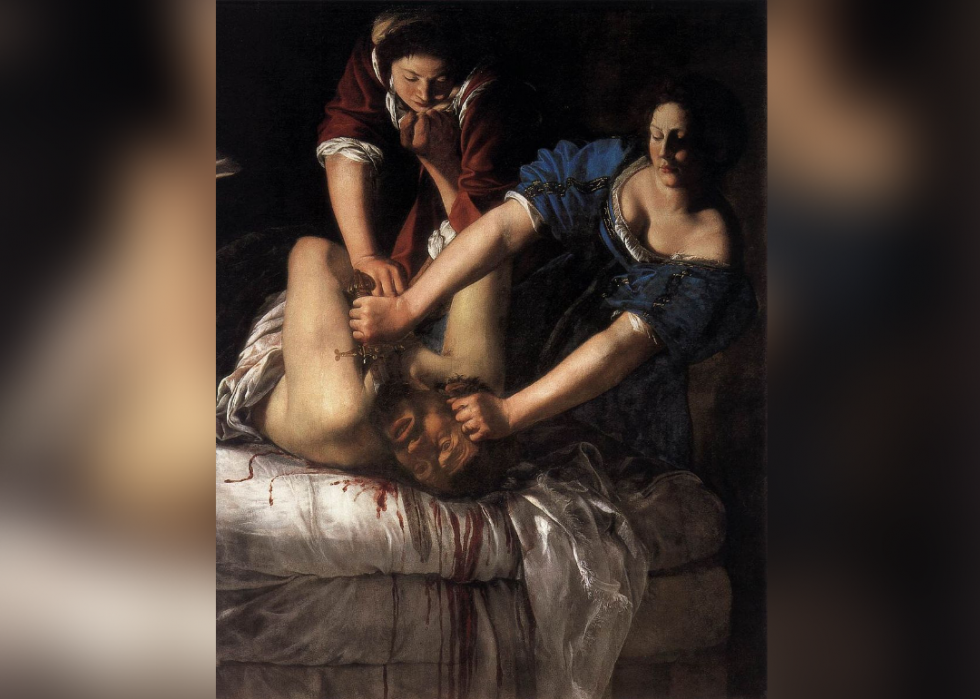
Historically, it hasn't been easy for women artists to intermission into the large time, simply Baroque painter Artemisia Gentileschi did just that, exercising her demons in the process. Sexually assaulted at eighteen, Gentileschi angrily confronted her attacker in a public trial which ultimately set him free. She channeled her ensuing rage into her work, notably "Judith Slaying Holofernes," which depicts determined Old Testament heroine Judith severing the caput of the drunken Babylonian general.

27 / 50

Paul Vicente // Getty Images

Myra

- Creative person: Marcus Harvey
- Year: 1995

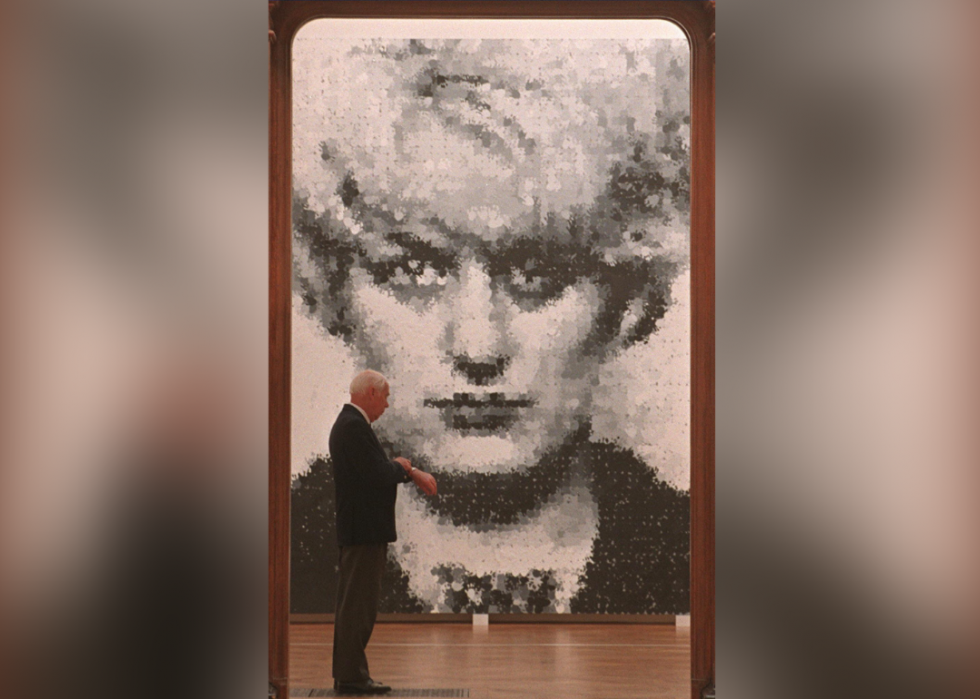
When Marcus Harvey'southward massive painting of Britain'south almost despised adult female—'60s child killer Myra Hindley—debuted at the 1997 Sensation exhibition at London's Royal Academy of Arts, to say it was met with controversy would exist an understatement. Four members of the Academy resigned in protestation and the painting was vandalized repeatedly.

28 / 50

Public Domain // Wikimedia Commons

Nocturne in Black and Aureate, the Falling Rocket

- Artist: James Abbott McNeill Whistler
- Yr: 1875

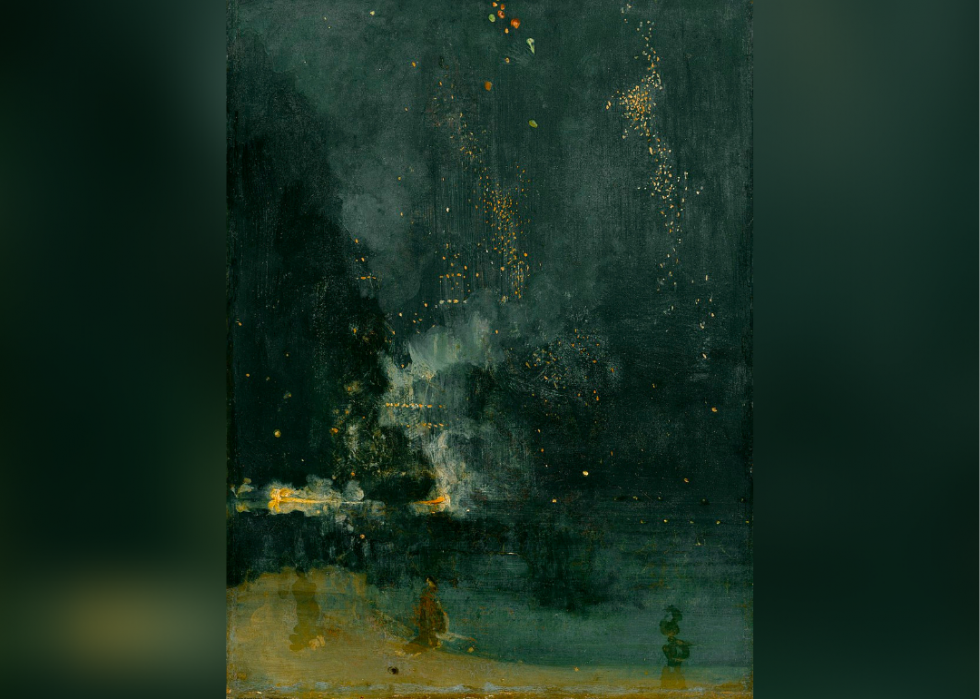
What could exist and then objectionable about a painting of fireworks over a picturesque London park? Quite a lot, evidently. Whistler, a proponent of the aesthetic motility, failed to impress revered Victorian art critic John Ruskin, with his series of paintings referred to as his "nocturnes." Ruskin savaged Whistler's work—too as the painting'south hefty asking price of 200 guineas (a guinea was a coin equal to most one-quarter ounce of gilt, minted betwixt 1663–1814 in Great Britain). Whistler retaliated by taking Ruskin to court, suing him for libel. Whistler emerged triumphant but the ordeal broke both men, bankrupting Whistler and causing Ruskin to resign his Oxford professorship.

29 / 50

Public Domain // Wikimedia Eatables

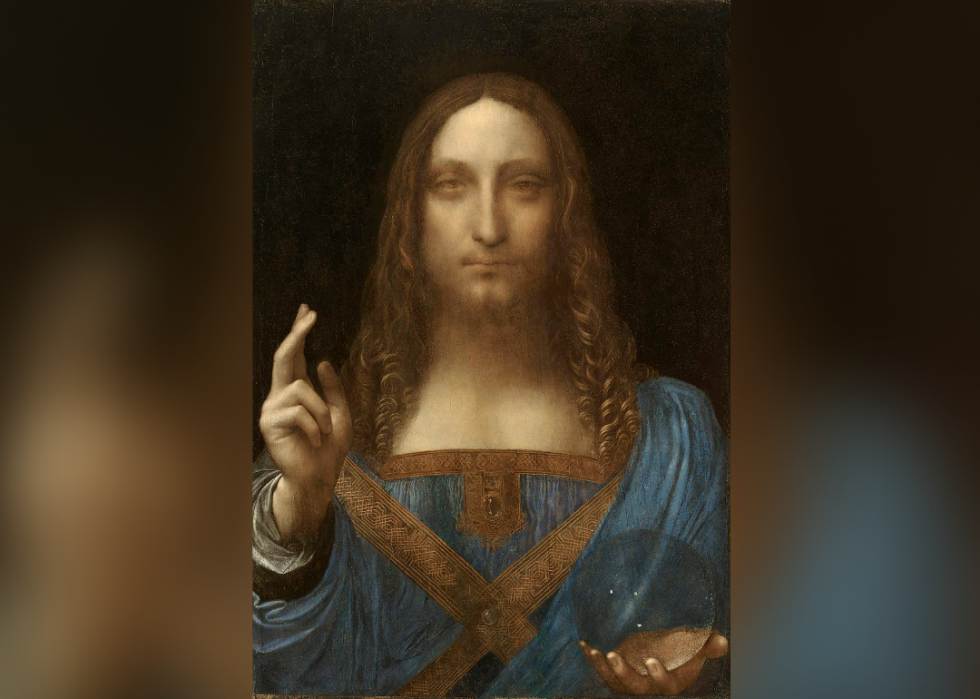
Salvator Mundi

- Creative person: Leonardo da Vinci
- Twelvemonth: 1500

Believed for years to exist the product of his atelier, or even a re-create of a lost work by the Renaissance master, "Salvator Mundi" sold at sale in November 2017 for a cool $450.three million later scholars reached a consensus that the painting was the work of da Vinci. Thought to be bound for the Louvre Abu Dhabi, the pocket-sized panel disappeared from public view immediately after auction at Christie'due south. It is believed to be in the possession of a Saudi prince (possibly Mohammed bin Salman Al Saud), either locked abroad in a Swiss depository financial institution vault, or displayed on a luxury yacht somewhere on the high seas.

xxx / 50

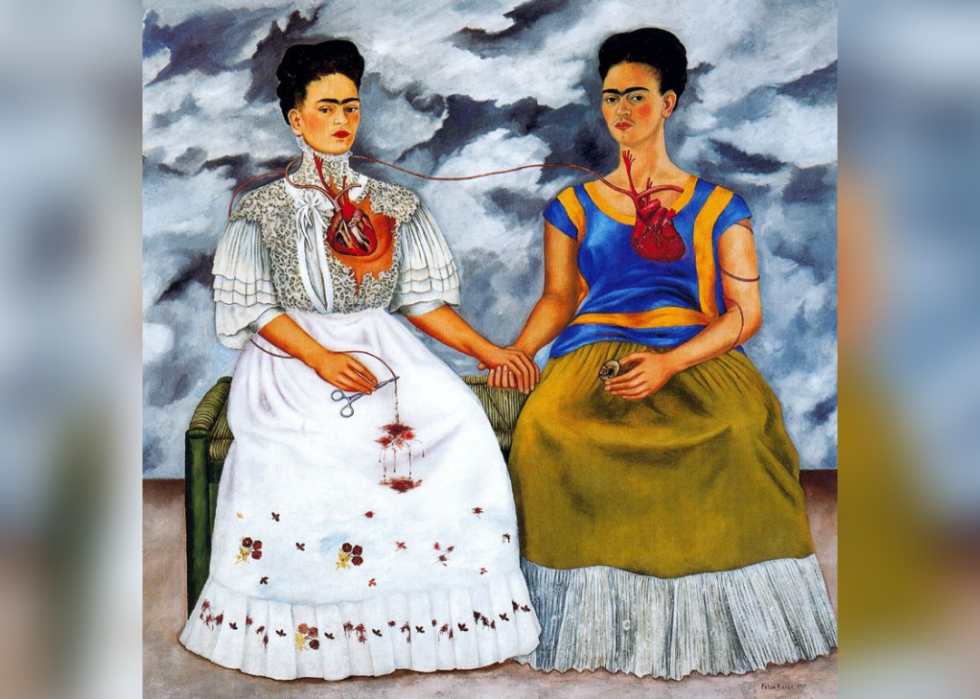
The Ii Fridas

- Artist: Frida Kahlo
- Yr: 1939

Mexican creative person Frida Kahlo has developed an almost cult-like post-obit in recent years, but took a back seat to husband and fellow-creative person Diego Rivera during her lifetime. Kahlo's work is infused with a securely personal iconography and references a life of concrete and emotional anguish. "The Two Fridas," portrays the creative person before and afterwards her painful separation from Rivera; on the left equally a bride with an eviscerated heart, and on the right dressed in the traditional Mexican costume she favored during happier times with Rivera.

31 / 50

Public Domain // Wikimedia Commons

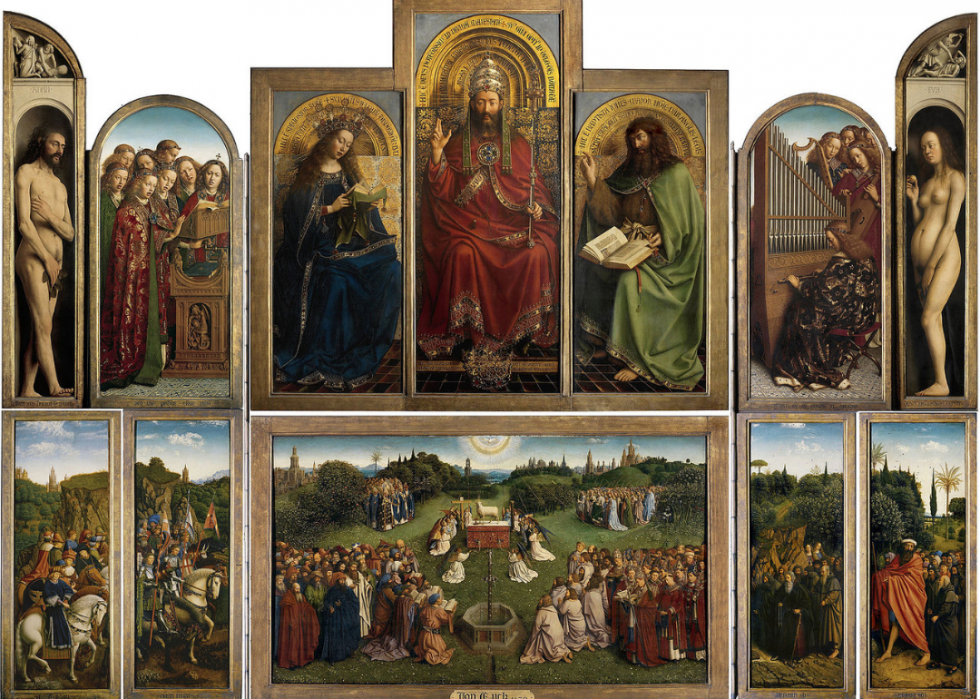
The Ghent Altarpiece

- Artist: Hubert and Jan van Eyck
- Year: c. 1432

Set aflame past Calvinists, hacked apart by avaricious dealers, and repeatedly stolen, "The Ghent Altarpiece" is arguably the most resilient painting in the history of art. Brothers Hubert and Jan van Eyck's Early Netherlandish polyptych, composed of 12 panels, was created for St. Bavo's Cathedral in Ghent, Kingdom of belgium. In 1934, 1 of the smaller panels was stolen and never recovered. Several years later, Hitler developed an interest in the painting and had information technology transported to Germany, where it was rescued from a table salt mine by the military machine unit of measurement composed of art historians known as The Monuments Men.

32 / 50

Sailko // Wikimedia Commons

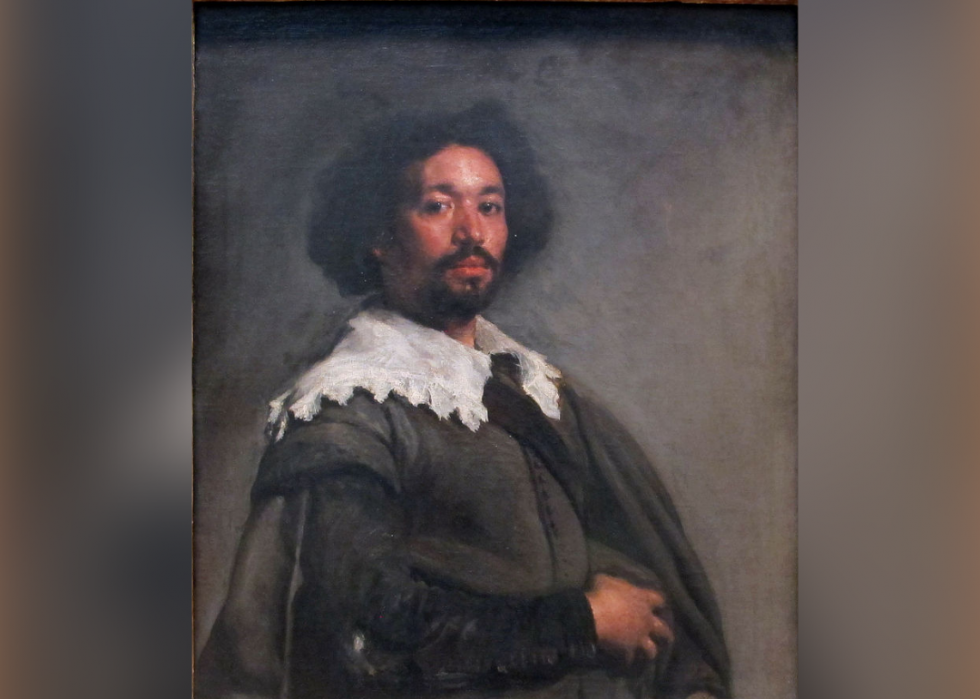
Juan de Pareja

- Artist: Velázquez (Diego Rodríguez de Silva y Velázquez)
- Yr: 1650

A masterpiece of the Spanish Baroque, Velázquez's introspective portrait of his atelier assistant, Juan de Pareja, was met with adulation from contemporaries. An artist in his own right, Pareja wasn't Velázquez's assistant by choice—he was the artist's slave. Before long after the painting was finished, Pareja was freed and went on to work as a painter in Madrid.

33 / 50

Public Domain // Wikimedia Eatables

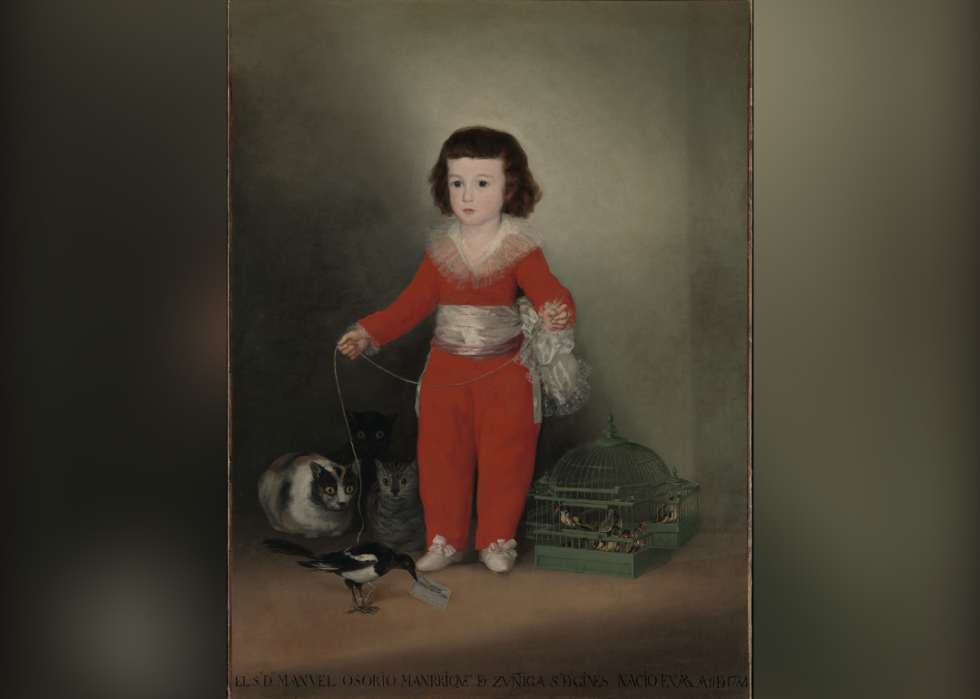
Manuel Osorio Manrique de Zuñiga

- Artist: Goya (Francisco de Goya y Lucientes)
- Twelvemonth: 1787–88

Vicente Joaquín Osorio de Moscoso y Guzmán, count of Altamira, commissioned this tender portrait of his young son, Manuel, from court painter Francisco Goya. Dressed in a ruby silk romper with white cuffs and collar, the elaborately dressed child poses with a menagerie of family pets, including a magpie. The prototype immortalized the little boy who passed away but a few years after information technology was painted.

34 / 50

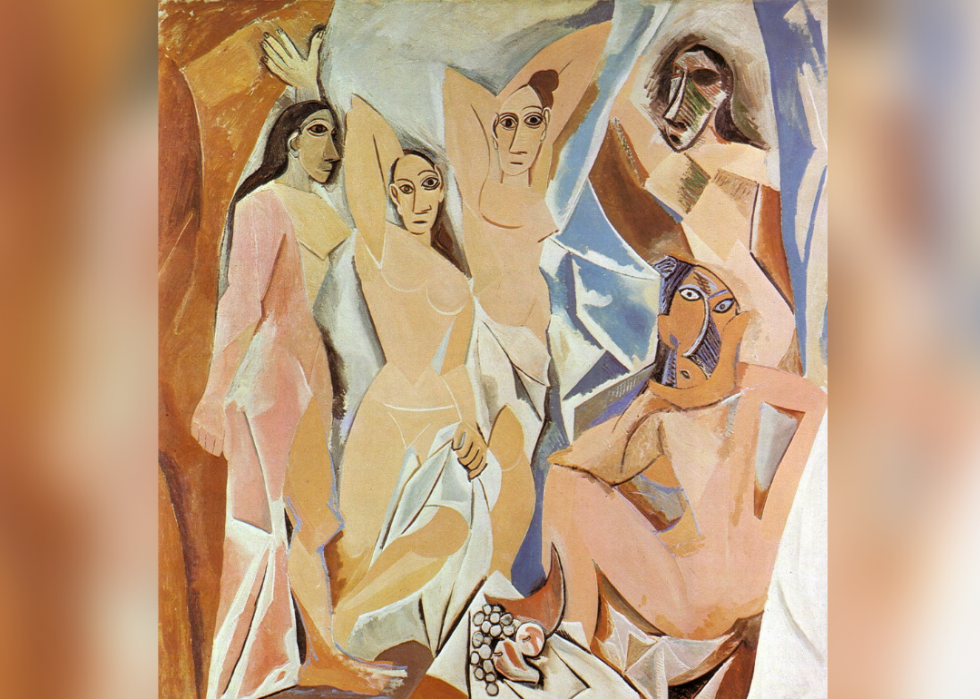
Demoiselles d'Avignon

- Artist: Pablo Picasso
- Year: 1907

An icon of Cubism, Pablo Picasso's daring group portrait depicting an unabashed group of Spanish prostitutes was met with a tepid response from colleagues and critics akin. A anarchism of apartment, geometric planes, Picasso drew inspiration both from African art and that of ancient Iberia.

35 / 50

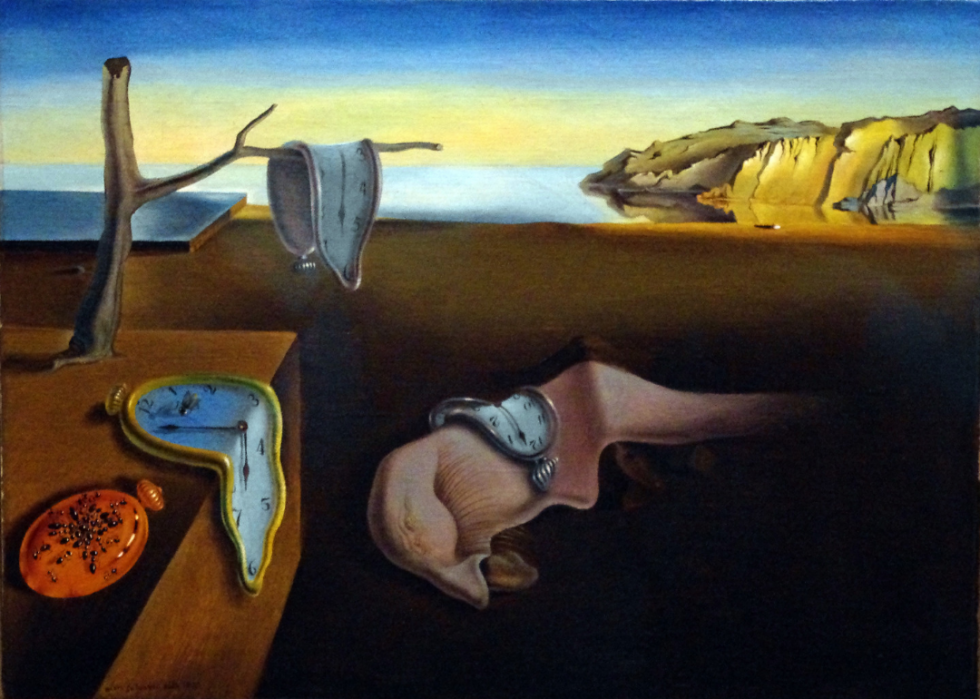
The Persistence of Memory

- Artist: Salvador Dali
- Year: 1931

Surrealist Salvador Dali subverts reality with this mesmerizing image of deflated timepieces scattered over a desert landscape. The composition defies logic, evoking a dream-like land. Dali employed the "paranoiac-critical method" in his creative process, cocky-inducing a delusional state.

36 / l

Public Domain // Wikimedia Commons

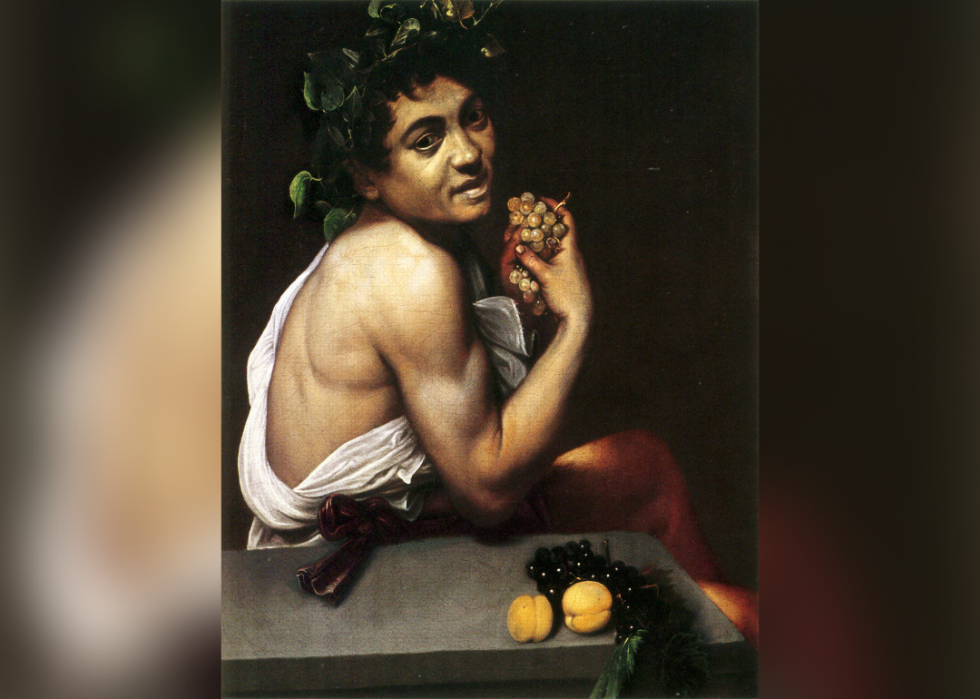
Young Ill Bacchus

- Artist: Caravaggio
- Year: 1593

The God of Wine in Caravaggio'due south canvas has a distinctly green tinge, suggesting that he'south imbibed a bit besides much of the fermented grape. A possible cocky-portrait, the unusual representation of the Roman deity may have been sparked by Carravagio's hospitalization for an unknown illness.

37 / l

Public Domain // Wikimedia Commons

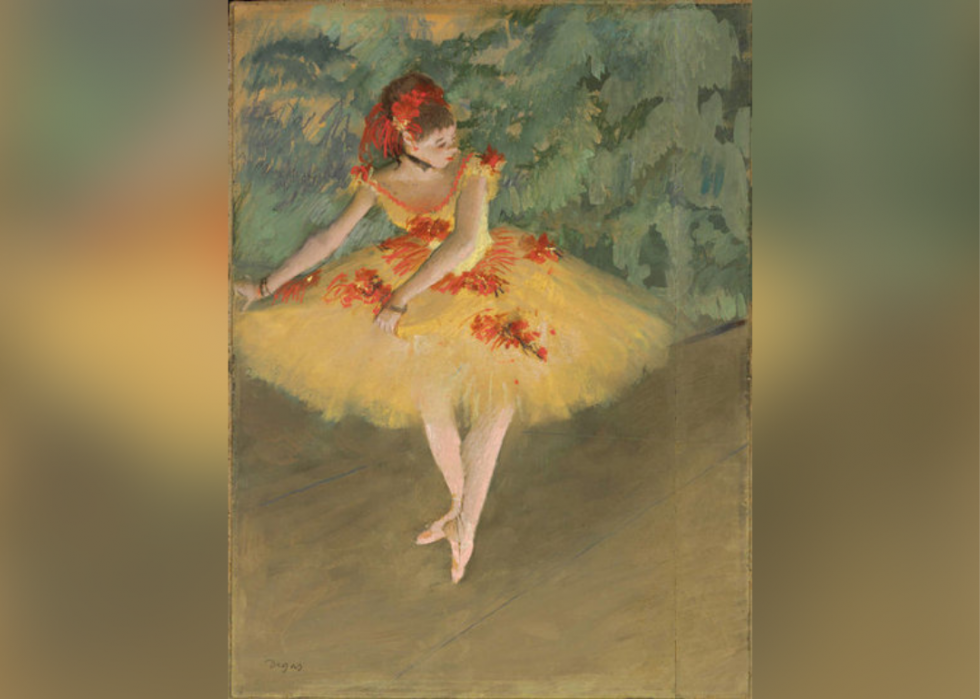
Dancer Making Points

- Artist: Edgar Degas
- Year: 1878–80

Degas' "Dancer Making Points"—valued at $10 million—disappeared from reclusive copper heiress Huguette Clark'southward Fifth Avenue habitation, inexplicably surfacing in New York's David Findlay Gallery shortly later. The notoriously private Clark realized the painting was missing, but declined to report it to authorities. When information technology was revealed that Herbert Bloch of H&R Block fame had purchased information technology, a compromise was reached with Clark whereby the painting was donated to the Nelson-Atkins Museum of Art in Kansas Metropolis.

38 / 50

Public Domain // Wikimedia Commons

Portrait of the Male child Eutyches

- Artist: Unknown
- Twelvemonth: c. 100–150 A.D.

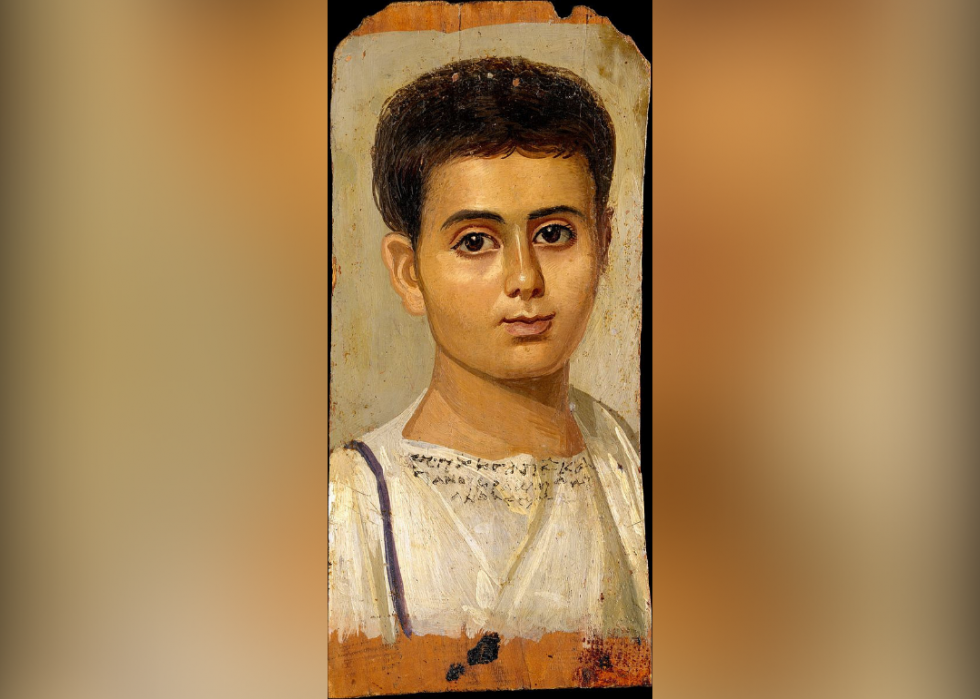
"Portrait of the Boy Eutyches" is just one of hundreds of remarkably life-like paintings produced in the ancient Egyptian Fayum region. Noted for their large, expressive optics, these panels were painted with encaustics (hot wax tinted with pigments). Roman Egypt was a cultural melting pot, and the Fayum portraits reverberate the cultural crossroads in which they were created. The encaustic process used by the Romans was adult by the ancient Greeks, and the resulting portraits were placed over the faces of the mummified dead—a distinctively Egyptian tradition.

39 / fifty

Public Domain // Wikimedia Eatables

A Lord's day on La Grande Jatte

- Artist: Georges Seurat
- Year: 1884

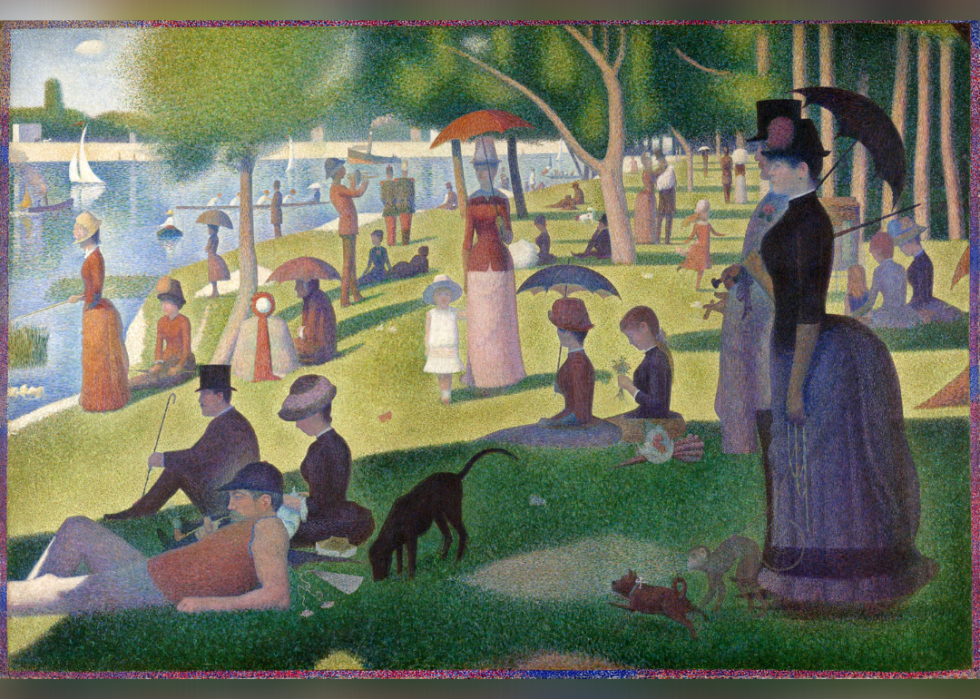
It took Seurat two years to finish his all-time-known work, pieced together from dozens of sketches the artist made of working-class Parisians. Critics panned the seven-by-10-human foot painting when it was first exhibited in 1886, dubious of the complicated theory of low-cal and color underpinning Seurat's pioneering pointillism. Over the course of the next century, popular opinion buoyed the painting to cult condition, inspiring Stephen Sondheim to pen the hit Broadway musical "Sunday in the Park with George."

40 / 50

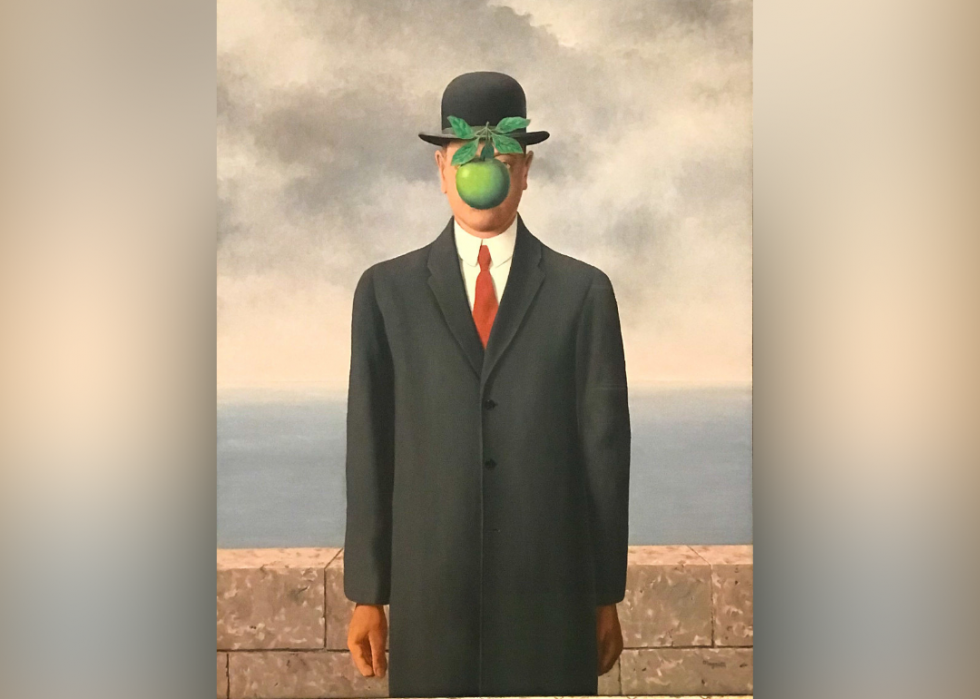
The Son of Human being

- Artist: René Magritte
- Twelvemonth: 1946

The works of the Belgian painter René Magritte are oftentimes caput-scratchers, and "The Son of Man"—a self-portrait of the artist with his face obscured by a giant apple—is no exception. The apple was 1 of the artist'southward favorite motifs, but its meaning is uncertain. The championship chosen by Magritte is maybe more illuminating, referencing Jesus Christ. Some critics have called the slice a surrealist interpretation of the transfiguration of Jesus.

41 / fifty

Public Domain // Wikimedia Eatables

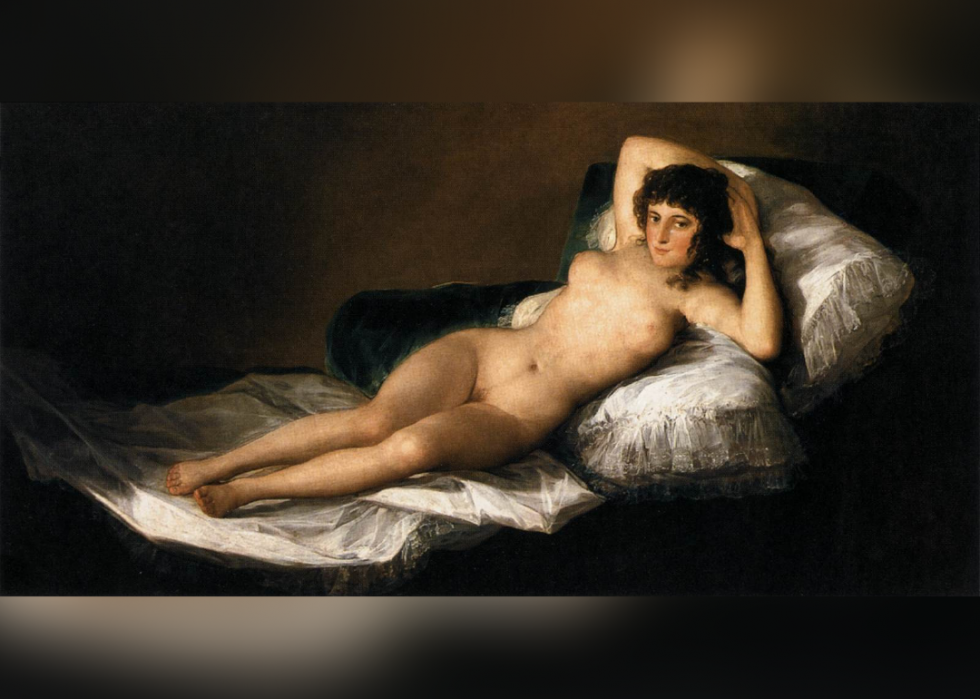
The Nude Maja

- Creative person: Francisco Goya
- Year: 1797–1800

Goya painted two versions of the Maja—one naked, the other fully clothed. The painting is believed to have been commissioned past Spanish Prime Government minister Manuel de Godoy and was intended to supplement his existing collection of nudes. In 1814, the Inquisition confiscated the painting. Today, it hangs side by side to its companion in Madrid'due south Museo del Prado.

42 / 50

Public Domain // Wikimedia Commons

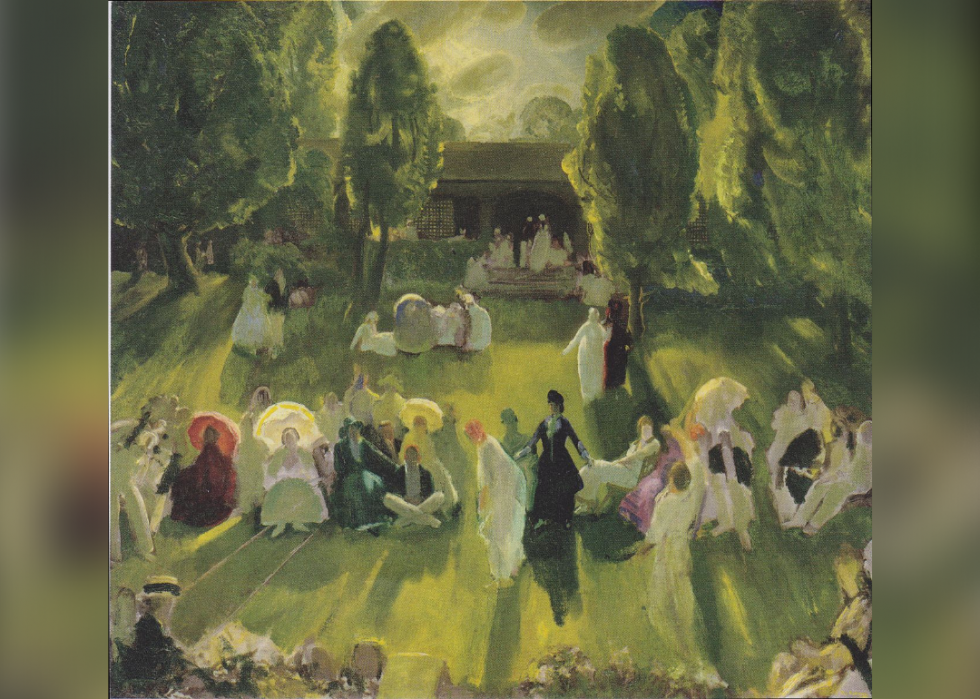
Tennis at Newport

- Artist: George Bellows
- Year: 1919

A departure from his gritty paintings of pugilists, George Bellows' "Tennis at Newport" depicts a tony tournament in Newport, Rhode Island. Bathed in an otherworldly lite, the painting focuses on the spectral images of the spectators, as opposed to the players. A member of the early 20th-century Ashcan School, American creative person Bellows was instrumental in the organisation of the greatly influential 1913 Armory show in New York.

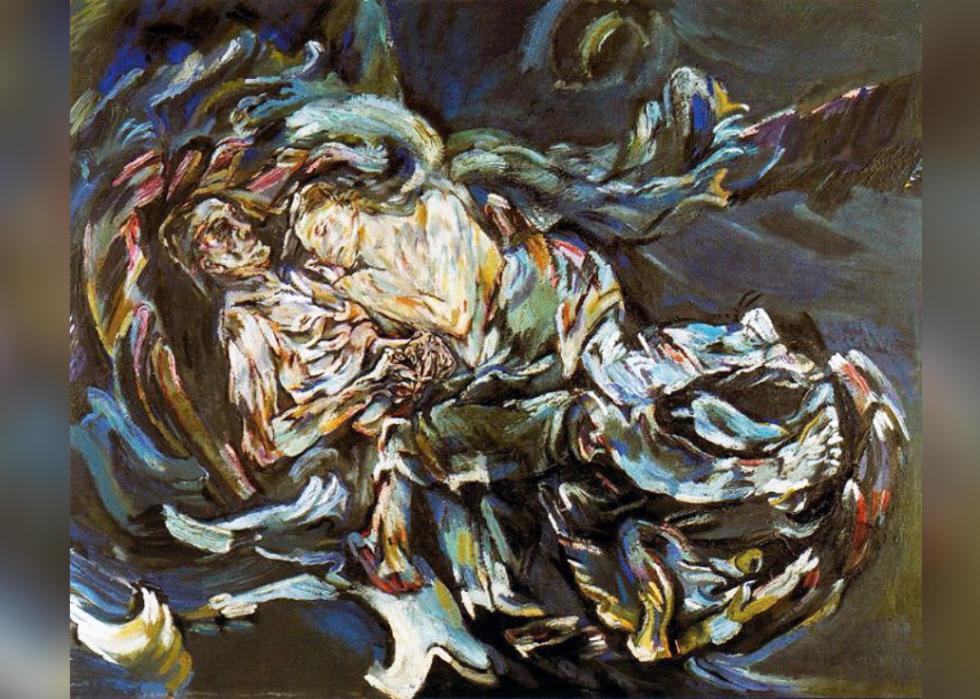
43 / l

Bride of the Current of air

- Artist: Oskar Kokoschka
- Year: 1914

A dearest letter to his mistress, Oskar Kokoschka'due south most famous work depicts the creative person entwined with his muse, Alma Mahler—the widow of composer Gustav Mahler. The celebrated expressionist was so dejected when Mahler ended their passionate affair, he commissioned a life-size doll in her image.

44 / 50

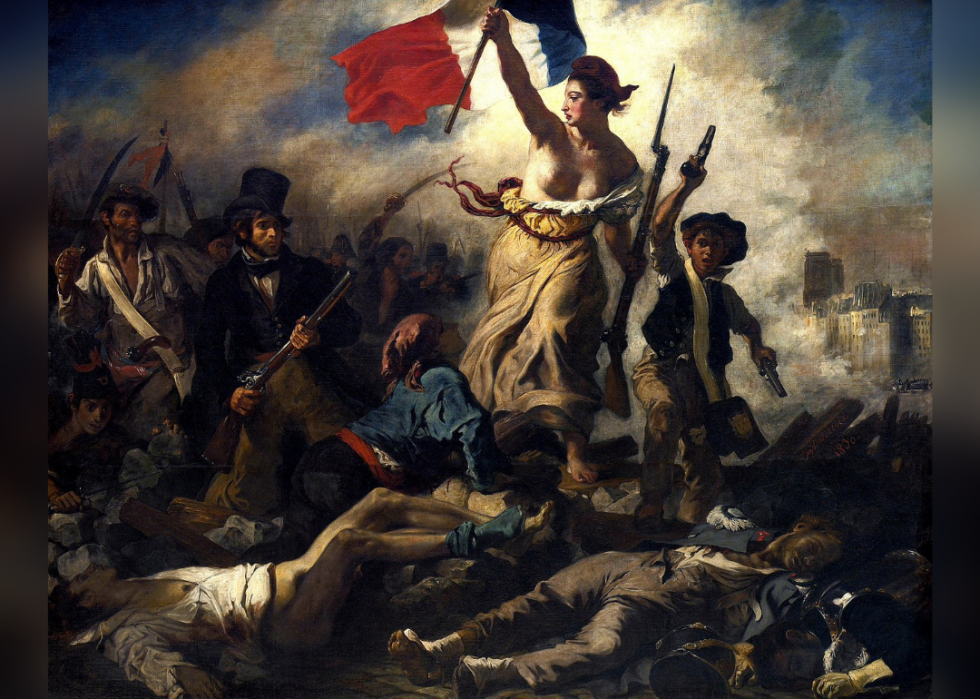
Public Domain // Wikimedia Eatables

Liberty Leading the People

- Artist: Eugène Delacroix
- Twelvemonth: 1830

While Delacroix's "Freedom Leading the People" may exist familiar to modern viewers from the cover of Coldplay'due south 2008 release,"Viva la Vida," the exuberant canvas was originally intended to celebrate the July Revolution of 1830. Dominating the composition is the cardinal figure of a woman belongings the tricolor—considered to be the primeval known depiction of Marianne, the female personification of the Republic of France.

45 / 50

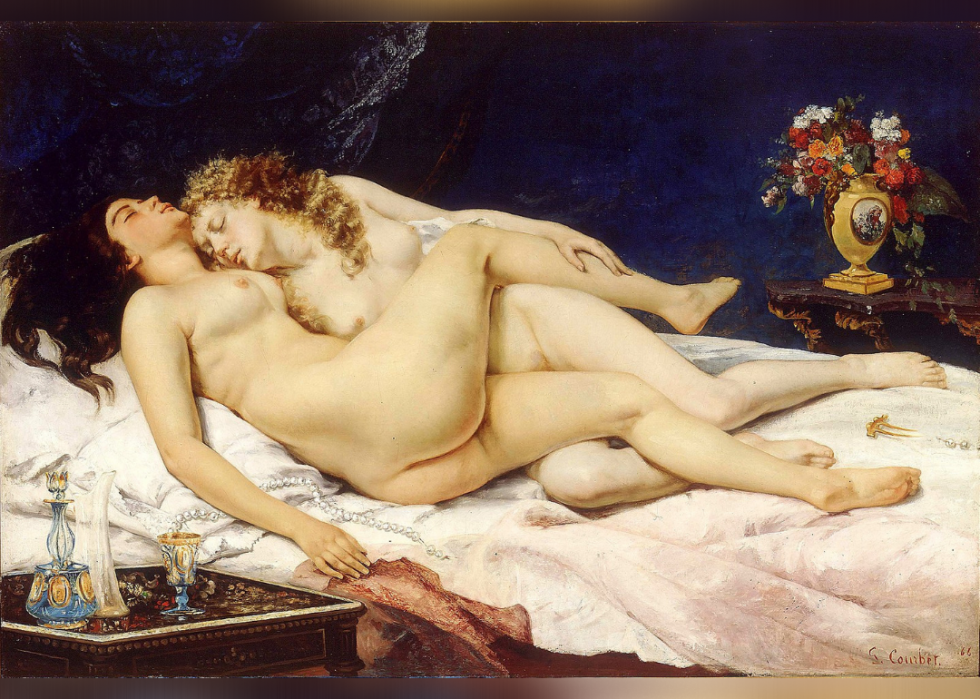
Public Domain // Wikimedia Commons

The Sleepers

- Artist: Gustave Courbet
- Yr: 1866

Painted for the Turkish diplomat Halil Şerif Pasha, Courbet's frankly erotic canvas sidestepped the Paris Salon, where it most certainly would accept been met with condemnation. Pasha was an avid collector of Western paintings—notably those showcasing the female person form—purchasing works by realists Delacroix and Ingres in improver to Courbet.

46 / l

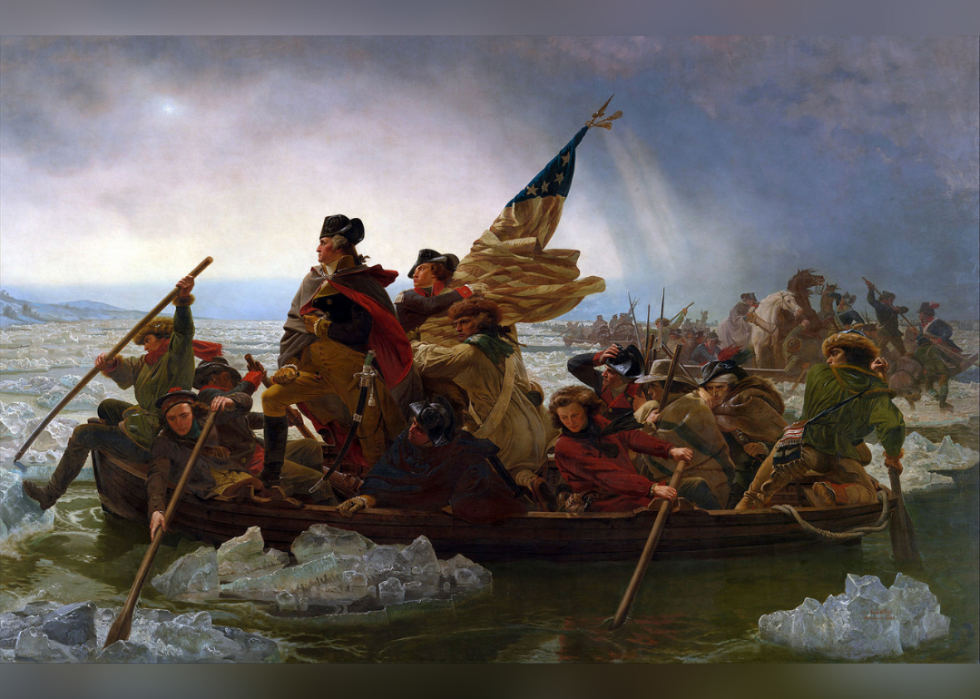
Public Domain // Wikimedia Eatables

Washington Crossing the Delaware

- Artist: Emanuel Leutze
- Year: 1851

Not only was the iconic "Washington Crossing the Delaware" painted almost 75 years after the Revolutionary War, but it was also painted by German artist Emanuel Leutze in Düsseldorf. Leutze had spent fourth dimension in the U.Due south. and painted the scene with the hope that it would inspire European revolutionaries.

47 / fifty

Allie_Cauflield // Flickr

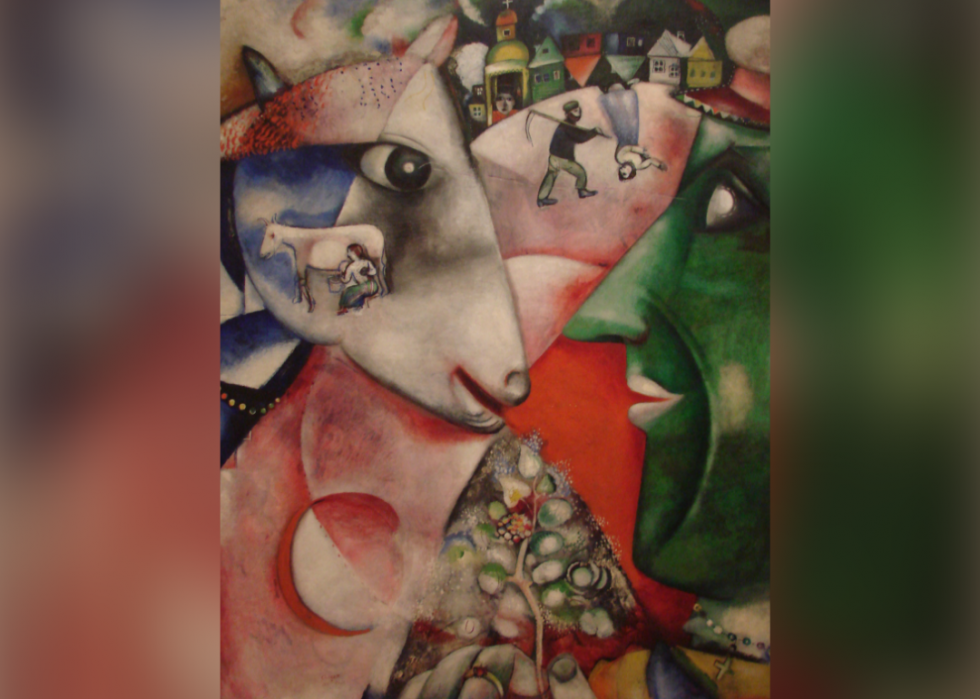
I and the Village

- Creative person: Marc Chagall
- Year: 1911

An ethereal, dream-like romanticism infuses Russian expat Marc Chagall's vision of life on the shtetl in "I and the Village." Heavy on symbolism, the painting demonstrates a Cubist influence, to which the young Chagall was exposed while living in Paris.

48 / 50

Public Domain // Wikimedia Commons

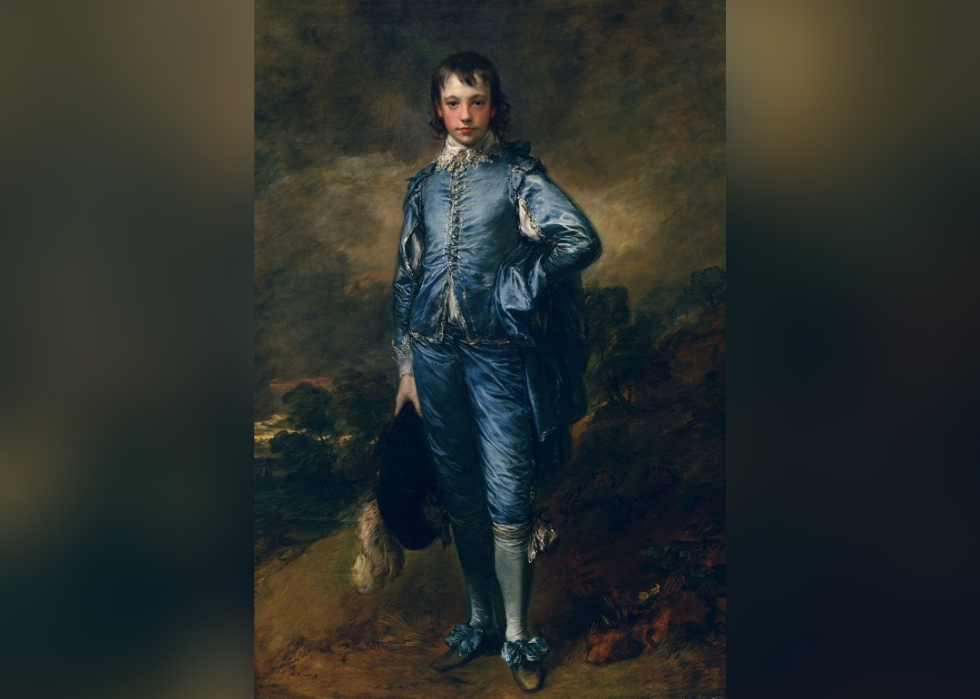
The Blue Male child

- Creative person: Thomas Gainsborough
- Year: 1770

Gainsborough's "Bluish Male child" was an immediate hit when information technology first debuted at London's Regal Academy of Arts and continues to be reproduced for popular consumption. Believed to be a portrait of Jonathan Buttall, whose father was a friend of Gainsborough, Buttall owned the painting until bankruptcy forced him to sell information technology.

49 / 50

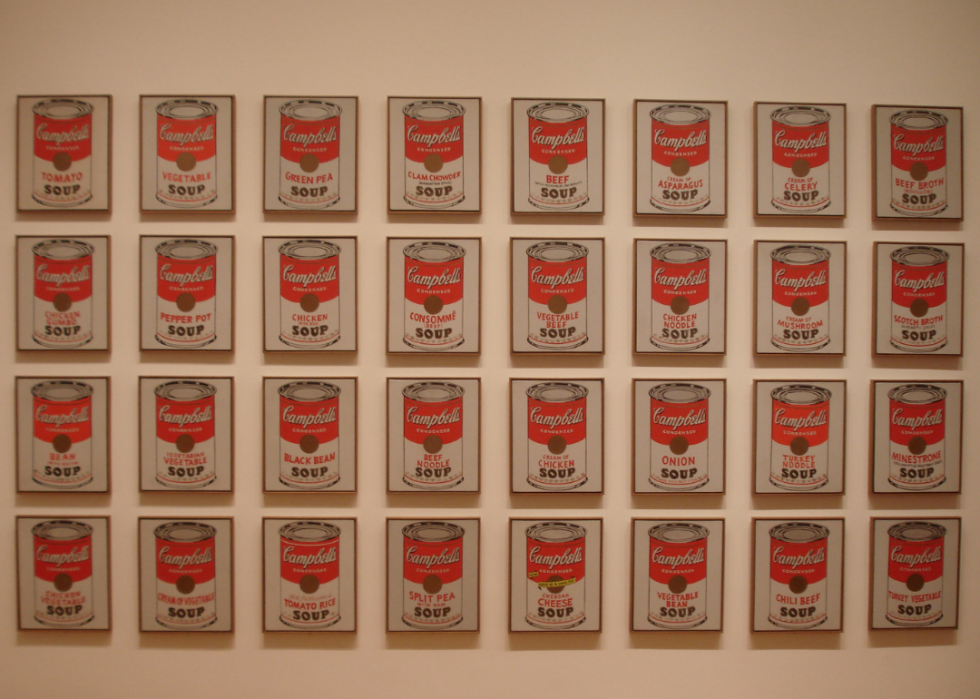
Campbell's Soup Cans

- Creative person: Andy Warhol
- Year: 1962

The panels composing Andy Warhol's "32 Campbell's Soup Cans" were almost separated for all eternity when they were first exhibited at Los Angeles' Ferus Gallery. The paintings were an immediate hit, and possessor Irving Blum sold v of them before coming to the shrewd realization that the canvases would be of even greater value every bit a complete set. Blum tracked downwards the paintings that had sold (including one belonging to actor Dennis Hopper), and reunited them.

50 / fifty

Public Domain // Wikimedia Commons

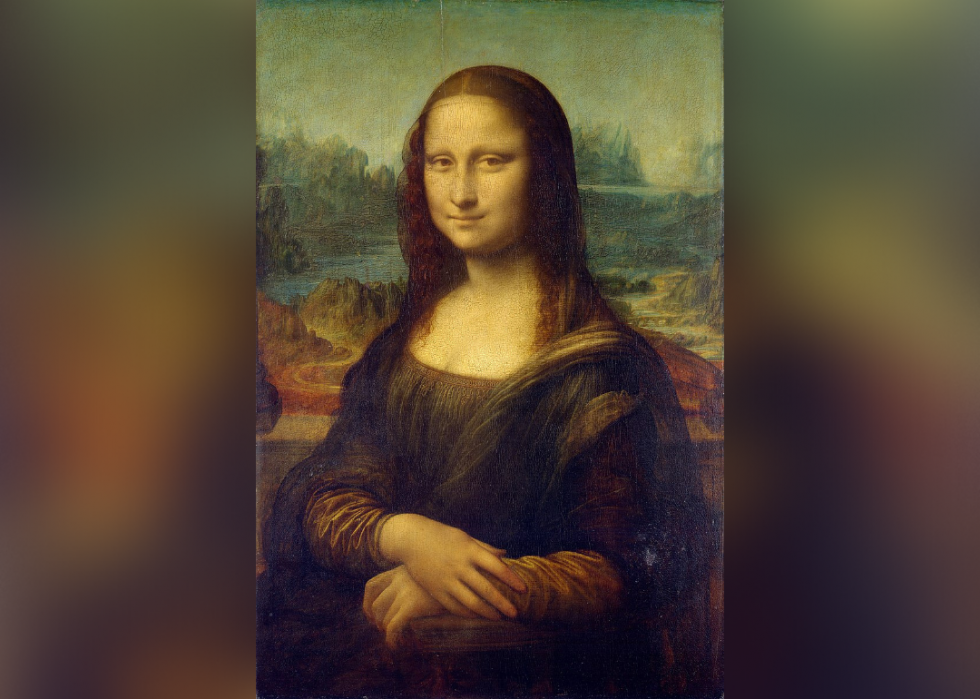
Mona Lisa

- Artist: Leonardo da Vinci
- Yr: 1503

Leonardo da Vinci's woman of mystery has intrigued viewers for centuries. Traditionally identified as Italian noblewoman Lisa Del Giocondo, countless hypotheses accept been put forth equally to the sitter'south identity every bit well as explanations for her seemingly enigmatic smile. All-encompassing multi-spectral imaging conducted by Lumiere Technology in 2006, which uncovered years of varnish, didn't shed any light every bit to the reasons behind the Mona Lisa'south facial expression, but it did reveal that her smile was originally broader than it appears today.

You may too like: The 51 women who have won the Nobel Prize

Trending Now