Which Theme Can Be Found in the Story of Atalanta?
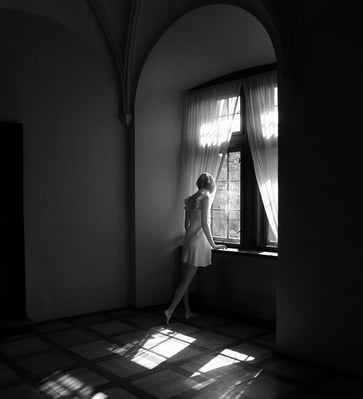
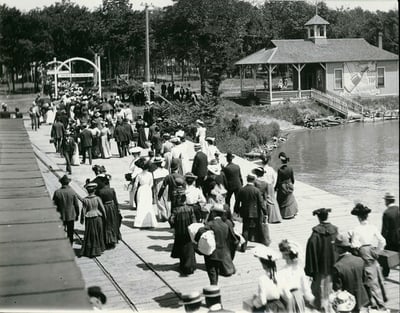
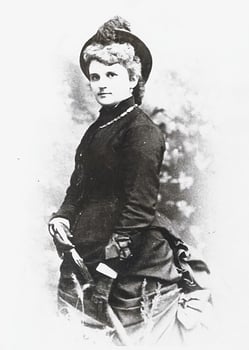
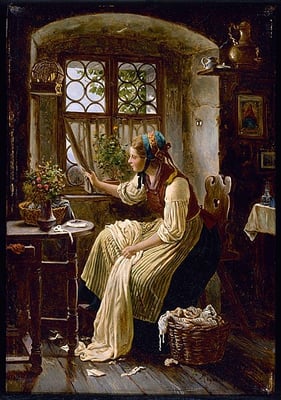
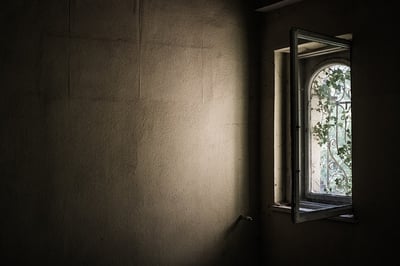
Imagine a world where women are fighting for unprecedented rights, the economical climate is unpredictable, and new developments in technology are made every twelvemonth. While this world might audio like the present day, it likewise describes America in the 1890s . It was in this world that author Kate Chopin wrote and lived, and many of the issues of the period are reflected in her brusque story, "The Story of an 60 minutes." At present, over a century later, the story remains one of Kate Chopin's most well-known works and continues to shed low-cal on the internal struggle of women who have been denied autonomy. In this guide to Kate Chopin'southward "The Story of an Hour," we'll discuss: Past the end of this article, yous'll accept an expert grasp on Kate Chopin'due south "The Story of an Hour." So let'southward get started! If it'south been a little while since you've read Kate Chopin'due south "The Story of an Hr," it can be difficult to think the important details. This section includes a quick recap, but yous can notice "The Story of an 60 minutes" PDF and full version here . We recommend y'all read it again before diving into our analyses in the side by side section! For those who merely need a refresher, hither's "The Story of an Hour" summary: Mrs. Louise Mallard is at home when her sister, Josephine, and her husband'southward friend, Richards, come to tell her that her husband, Brently Mallard, has been killed in a railroad blow . Richards had been at the paper office when the news broke, and he takes Josephine with him to break the news to Louise since they're afraid of aggravating her heart status. Upon hearing the news of her husband's expiry, Louise is grief-stricken, locks herself in her room, and weeps. From here, the story shifts in tone. As Louise processes the news of her husband's decease, she realizes something wonderful and terrible at the aforementioned time: she is free . At beginning she's scared to admit information technology, but Louise rapidly finds peace and joy in her access. She realizes that, although she will be sad about her married man ("she had loved him—sometimes," Chopin writes), Louise is excited for the opportunity to alive for herself. She keeps repeating the word "free" equally she comes to terms with what her husband's death means for her life. In the meantime, Josephine sits at Louise's door, coaxing her to come out because she is worried about Louise'southward heart status. Later praying that her life is long-lived, Louise agrees to come out. However, as she comes downstairs, the front door opens to reveal her husband, who had not been killed past the accident at all. Although Richards tries to keep Louise's heart from stupor by shielding her married man from view, Louise dies suddenly, which the doctors later attribute to "heart illness—of the joy that kills ." Kate Chopin, the author of "The Story of an Hour," has become 1 of the most important American writers of the 19th century. Before we movement into "The Story of an 60 minutes" analysis department, it'due south helpful to know a piffling scrap nigh Kate Chopin and the world she lived in. Born in 1850 to wealthy Catholic parents in St. Louis, Missouri, Kate Chopin (originally Kate O'Flaherty) knew hardship from an early age. In 1855, Chopin lost her father, Thomas, when he passed away in a tragic and unexpected railroad accident. The events of this loss would stay with Kate for the rest of her life, somewhen condign the footing for "The Story of an Hr" about forty years after. Chopin was well-educated throughout her childhood , reading voraciously and becoming fluent in French. Chopin was also very aware of the dissever betwixt the powerful and the oppressed in society at the time . She grew up during the U.S. Civil War, so she had first-hand knowledge of violence and slavery in the U.s.a.. Chopin was as well exposed to not-traditional roles for women through her familial situation. Her mother, grandmother, and great-grandmother chose to remain widows (rather than remarry) after their husbands died. Consequently, Chopin learned how of import women's independence could be, and that idea would permeate much of her writing subsequently on. Every bit Chopin grew older, she became known for her beauty and congeniality by society in St. Louis. She was married at the age of nineteen to Oscar Chopin, who came from a wealthy cotton-growing family unit. The couple moved to New Orleans, where they would start both a general store and a big family. (Chopin would give birth to seven children over the next nine years!) While Oscar adored his married woman, he was less capable of running a business. Financial trouble forced the family to move around rural Louisiana. Unfortunately, Oscar would die of swamp fever in 1882 , leaving Chopin in heavy debt and with the responsibility of managing the family's struggling businesses. Later trying her hand at managing the property for a year, Chopin conceded to her female parent's requests to return with her children to St. Louis. Chopin's mother died the year subsequently. In order to support herself and her children, Kate began to write to back up her family. Luckily, Chopin found firsthand success equally a writer. Many of her short stories and novels—including her near famous novel, The Awakening— dealt with life in Louisiana . She was besides known as a fast and prolific author, and by the end of the 1900s she had written over 100 stories, articles, and essays. Unfortunately, Chopin would laissez passer away from a suspected cerebral hemorrhage in 1904, at the age of 54 . Only Kate Chopin's "The Story of an Hour" and other writings have withstood the test of fourth dimension. Her work has lived on, and she's now recognized as ane of the most important American writers of the 19th century. American life was undergoing significant modify in the 19th century. Engineering science, culture, and even leisure activities were changing. "The Story of an Hour" was written and published in 1894, right as the 1800s were coming to a close. Every bit the world moved into the new century, American life was also changing rapidly. For instance, t he workplace was changing drastically in the 1890s . Gone were the days where near people were expected to work at a trade or on a farm. Mill jobs brought on by industrialization made piece of work more efficient, and many of these manufactory owners gradually implemented more humane treatment of their workers, giving them more leisure time than e'er. Though the country was in an economic recession at this fourth dimension, technological changes like electrical lighting and the popularization of radios bettered the daily lives of many people and allowed for the creation of new jobs. Notably, however, piece of work was different for women . Working women as a whole were looked down upon by society, no thing why they establish themselves in demand of a job. Women who worked while they were married or pregnant were judged even more harshly. Women of Kate Chopin'due south social rank were expected to non piece of work at all , sometimes even delegating the responsibleness of managing the house or kid-rearing to maids or nannies. In the 1890s, working was only for lower grade women who could not afford a life of leisure . In reaction to this, the National American Woman Suffrage Association was created in 1890, which fought for women's social and political rights. While Kate Chopin was non a formal member of the suffragette movements, she did believe that women should have greater freedoms as individuals and oftentimes talked about these ideas in her works, including in "The Story of an 60 minutes." Kate Chopin's "The Story of an Hour" a brusque exploration of marriage and repression in America. Now that you have some important groundwork information, it'south time to first analyzing "The Story of an Hour." This curt story is filled with opposing forces . The themes, characters, and even symbols in the story are ofttimes equal, only contrary, of 1 another. Inside "The Story of an Hour," analysis of all of these elements reveals a deeper meaning. A theme is a message explored in a piece of literature. Most stories accept multiple themes, which is certainly the example in "The Story of an Hour." Even though Chopin'due south story is curt, it discusses the thematic ideas of freedom, repression, and wedlock. Proceed reading for a discussion of the importance of each theme! The near prevalent theme in Chopin'southward story is the battle between freedom and "repression." Just put , repression happens when a person's thoughts, feelings, or desires are being subdued. Repression can happen internally and externally. For case, if a person goes through a traumatic accident, they may (consciously or subconsciously) choose to repress the memory of the accident itself. As well, if a person has wants or needs that order finds unacceptable, society can work to repress that individual. Women in the 19th century were often victims of repression. They were supposed to be demure, gentle, and passive—which often went confronting women'south personal desires. Given this, information technology becomes credible that Louise Mallard is the victim of social repression. Until the moment of her husband's supposed death, Louise does not experience free . In their marriage, Louise is repressed. Readers encounter this in the fact that Brently is moving around in the outside globe, while Louise is confined to her home. Brently uses railroad transportation on his own, walks into his house of his ain accordance, and has individual possessions in the form of his briefcase and umbrella. Brently is even costless from the cognition of the train wreck upon his render dwelling. Louise, on the other manus, is stuck at home by virtue of her position every bit a woman and her heart condition. Here, Chopin draws a potent contrast betwixt what it means to be free for men and women. While freedom is just office of what it means to be a man in America, freedom for women looks markedly different. Louise's life is shaped by what social club believes a woman should be and how a married woman should behave. Once Louise'south married man "dies," however, she sees a way where she can start claiming some of the more "masculine" freedoms for herself. Chopin shows how deeply of import freedom is to the life of a woman when, in the stop, it'southward not the shock of her married man'south return of her married man that kills Louise, but rather the thought of losing her liberty again. Marriage as a "The Story of an Hour" theme is more than merely an idyllic life spent with a significant other. The Mallard's marriage shows a reality of 1890s life that was familiar to many people. Wedlock was a means of social control —that is to say, marriage helped keep women in bank check and secure men'due south social and political power. While husbands were usually complimentary to wander the earth on their own, hold jobs, and brand important family decisions, wives (at to the lowest degree those of the upper grade) were expected to stay at abode and be domestic. Marriage in Louise Mallard'southward case has very picayune dear. She sees her union every bit a life-long bail in which she feels trapped, which readers see when she confesses that she loved her husband only "sometimes." More to the point, she describes her union as a "powerful will angle hers in that blind persistence with which men and women believe they have a right to impose a individual will upon a young man-animal." In other words, Louise Mallard feels injustice in the expectation that her life is dictated by the volition of her husband. Like the story, the marriages Kate witnessed often concluded in an early on or unexpected death. The women of her family, including Kate herself, all survived their husbands and didn't remarry. While history tells us that Kate Chopin was happy in her marriage, she was aware that many women weren't. By showing a marriage that had been built on control and society'southward expectations, Chopin'southward "The Story of an 60 minutes" highlights the demand for a globe that respected women as valuable partners in marriage as well every bit capable individuals. While this painting by Johann Georg Meyer wasn't specifically of Louise Mallard, "Young Woman Looking Through a Window" is a depiction of what Louise might have looked like every bit she realized her liberty. The best stories have adult characters, which is the case in "The Story of an Hour," as well. V characters make up the cast of "The Story of an Hour": By exploring the details of each grapheme, nosotros can better empathise their motivations, societal role, and purpose to the story. From the opening sentence alone, nosotros learn a lot about Louise Mallard. Chopin writes, "Knowing that Mrs. Mallard was afflicted with a heart trouble, bully intendance was taken to break to her every bit gently as possible the news of her husband'due south death." From that statement lone, we know that she is married, has a heart condition, and is probable to react strongly to bad news . We likewise know that the person who is sharing the bad news views Louise as delicate and sensitive. Throughout the side by side few paragraphs, we also learn that Louise is a housewife, which indicates that she would be part of the center-to-upper grade in the 1890s. Chopin also describes Louise'south appearance as "young," "fair, calm face," with lines of "forcefulness." These characteristics are not purely concrete, simply likewise drain into her character throughout the story. Louise'south personality is described equally different from other women . While many women would be struck with the news in disbelief, Louise cries with "wild abandonment"—which shows how powerful her emotions are. Additionally, while other women would be content to mourn for longer, Louise quickly transitions from grief to joy nearly her husband'southward passing. Ultimately, Chopin uses Louise's grapheme to bear witness readers what a woman's typical experience within wedlock was in the 1890s. She uses Louise to criticize the oppressive and repressive nature of marriage, peculiarly when Louise rejoices in her newfound liberty. Josephine is Louise'due south sister . Nosotros never hear of Josephine'due south last proper name or whether she is married or not. We do know that she has come with Richards, a friend of Brently's, to suspension the news of his death to her sister. When Josephine tells Louise the bad news, she's only able to tell Louise of Brently'southward death in "veiled hints," rather than telling her outright. Readers can interpret this as Josephine's attempt at sparing Louise's feelings. Josephine is especially worried nearly her sis's centre condition, which we encounter in greater item subsequently as she warns Louise, "You will make yourself ill." When Louise locks herself in her room, Josephine is desperate to make sure her sis is okay and begs Louise to let her in. Josephine is the central supporting character for Louise, helping her mourn, though she never knows that Louise found new liberty from her husband's supposed death . But from Josephine's actions and interactions with Louise, readers tin accurately surmise that she cares for her sister (even if she's unaware of how miserable Louise finds her life). Richards is another supporting graphic symbol, though he is described every bit Brently's friend, not Louise'southward friend. It is Richards who finds out about Brently Mallard's supposed death while at the newspaper office—he sees Brently's proper noun "leading the list of 'killed.'" Richards' main role in "The Story of an Hour" is to kick off the story'due south plot. Additionally, Richard'due south presence at the newspaper function suggests he's a writer, editor, or otherwise employee of the newspaper (although Chopin leaves this to readers' inferences). Richards takes plenty care to double-cheque the news and to brand certain that Brently's likely dead. He as well enlists Josephine's help to pause the news to Louise. He tries to get to Louise before a "less careful, less tender friend" tin break the pitiful news to her, which suggests that he's a thoughtful person in his own right. It's as well important to note is that Richards is aware of Louise's centre condition, pregnant that he knows Louise Mallard well plenty to know of her health and how she is likely to bear grief. He appears again in the story at the very end, when he tries (and fails) to shield Brently from his married woman'south view to prevent her heart from reacting desperately. While Richards is a background grapheme in the narrative, he demonstrates a high level of friendship, consideration, and care for Louise. Brently Mallard would have been riding in a train like this one when the accident supposedly occurred. Mr. Brently Mallard is the husband of the chief graphic symbol, Louise. We get few details about him, though readers exercise know he's been on a railroad train that has met with a serious accident. For the majority of the story, readers believe Brently Mallard is expressionless—though the end of "The Story of an Hr" reveals that he's been live all along. In fact, Brently doesn't even know of the railroad tragedy when he arrives dwelling "travel-stained." Immediately after Louise hears the news of his decease, she remembers him fondly. She remarks on his "kind, tender hands" and says that Brently "never looked save with love" upon her . It's not so much Brently as it's her marriage to him which oppresses Louise. While he apparently always loved Louise, Louise only "sometimes" loved Brently. She constantly felt that he "impose[d] a private volition" upon her, every bit near husbands do their wives. And while she realizes that Brently likely did and so without malice, she also realized that "a kind intention or a savage intention" makes the repression "no less a crime." Brently's absence in the story does two things. Start, it contrasts starkly with Louise's life of illness and solitude. 2nd, Brently's absence allows Louise to imagine a life of liberty exterior of the confines of marriage , which gives her hope. In fact, when he appears alive and well (and dashes Louise'south hopes of freedom), she passes away. Though the mention of them is brief, the final judgement of the story is striking. Chopin writes, "When the doctors came they said she had died of center disease—of the joy that kills." Just as she had no freedom in life, her liberation from the death of her hubby is told as a joy that killed her. In life as in death, the truth of Louise Mallard is never known. Everything the readers know almost her delight in her newfound liberty happens in Louise's ain heed; she never gets the gamble to share her hole-and-corner joy with anyone else. Consequently, the ending of the story is double-sided. If the doctors are to exist believed, Louise Mallard was happy to see her married man, and her heart betrayed her. And outwardly, no one has whatever reason to suspect otherwise. Her reaction is that of a dutiful, delicate wife who couldn't bear the stupor of her husband returned from the grave. But readers can infer that Louise Mallard died of the grief of a freedom she never had , so found, then lost once more than. Readers can interpret Louise'due south death as her experience of true grief in the story—that for her ideal life, briefly realized then snatched away. In "The Story of an Hr," the advent of hearts symbolize both repression and hope. Symbols are any object, word, or other element that appear in the story and have additional meanings beyond. Motifs are elements from a story that proceeds meaning from being repeated throughout the narrative. The line between symbols and motifs is often hazy, merely authors utilise both to help communicate their ideas and themes. In "The Story of an Hour," symbolism is everywhere, only the iii major symbols nowadays in the story are: Heart illness, referred to equally a "heart condition" within the text, opens and closes the text. The affliction is the initial cause for everyone'south business, since Louise's condition makes her delicate. Later, center affliction causes Louise'south decease upon Brently's safety return. In this example, Louise's ailing heart has symbolic value because it suggests to readers that her life has left her heartbroken. When she believes she's finally found freedom, Louise prays for a long life...when just the day earlier, she'd "had idea with a shudder that life might be long." Equally Louise realizes her freedom, information technology's almost as if her eye sparks back to life. Chopin writes, "Now her bosom rose and fell tumultuously...she was striving to beat it back...Her pulses crush fast, and the coursing blood warmed and relaxed every inch of her body." These words suggest that, with her newfound freedom, the symptoms of her centre disease have lifted. Readers tin surmise that Louise'southward diseased heart is the effect of being repressed, and hope brings her middle back to life. Unfortunately, when Brently comes back, and so does Louise'southward heart illness. And, although her death is attributed to joy, the return of her (both symbolic and literal) heart disease kills her in the end. The second set of symbols are Louise's firm and the world she can see exterior of her window. Chopin contrasts these two symbolic images to help readers better sympathise how matrimony and repression take affected Louise. Offset of all, Louise is confined to the abode—both inside the story and in full general. For her, withal, her home isn't a place to relax and feel comfy. Information technology'south more like a prison prison cell. All of the descriptions of the house reinforce the thought that it's closed off and inescapable . For instance, the front end door is locked when Mr. Mallard returns home. When Mrs. Mallard is overcome with grief, she goes deeper within her house and locks herself in her room. In that room, however, Mrs. Mallard takes note of the outdoors by looking out of her window. Even in her momentary grief, she describes the "open square earlier her house" and "the new leap life." The outdoors symbolize freedom in the story, so it's no surprise that she realizes her newfound liberty equally she looks out her window. Everything almost the outside is gratuitous, cute, open up, inviting, and pleasant...a stark contrast from the sadness within the house . The business firm and its differences from outdoors serve as one of many symbols for how Louise feels about her marriage: barred from a world of independence. Finally, joy and sorrow are motifs that come at unexpected times throughout "The Story of an Hour." Chopin juxtaposes joy and sorrow to highlight how tragedy releases Louise from her sorrow and gives her a joyous promise for the future. At showtime, sorrow appears as Louise mourns the death of her husband. Yet, in but a few paragraphs, she finds joy in the upshot equally she discovers a life of her own. Though Louise is able to come across that feeling joy at such an consequence is "monstrous," she continues to revel in her happiness. It is later that, when others await her to be joyful, Josephine lets out a "piercing cry," and Louise dies. Doctors interpret this equally "the joy that kills," merely more probable it's a sorrow that kills. The reversal of the "appropriate" feelings at each event reveals how counterintuitive the "self-assertion which she suddenly recognized as the strongest impulse of her beingness" is to the surrounding culture. This paradox reveals something staggering about Louise's married life: she is so unhappy with her situation that grief gives her promise...and she dies when that hope is taken away. Analyzing Chopin's "The Story of an Hour" takes time and careful idea despite the shortness of the story. The story is open up to multiple interpretations and has a lot to reveal near women in the 1890s, and many of the story's themes, characters, and symbols critique women's marriage roles during the period . There's a lot to dig through when it comes to "The Story of an Hour" analysis. If you're feeling overwhelmed, simply remember a few things : Remembering the cardinal plot points, themes, characters, and symbols will help yous write whatever essay or participate in whatever give-and-take. Kate Chopin'southward "The Story of an Hour" has much more to uncover, so read it again, ask questions, and start exploring the story across the page! 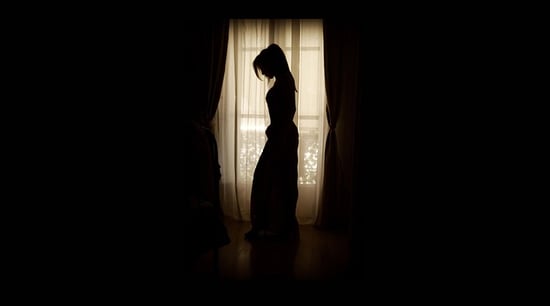
"The Story of an Hour" Summary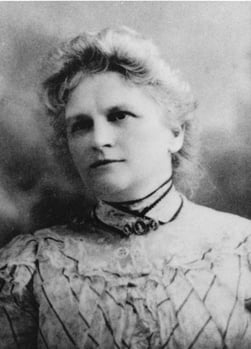
The History of Kate Chopin and the 1890s
A Brusque Biography of Kate Chopin
American Life in the 1890s
"The Story of an Hour" Assay
"The Story of an 60 minutes" Themes
Liberty and Repression
Wedlock
"The Story of an Hour" Characters
Louise Mallard
Josephine
Richards

Brently Mallard
The Doctor(s) 
"The Story of an Hour" Symbolism and Motifs
The Heart
The Firm and the Outdoors
Joy and Sorrow

Key Takeaways: Kate Chopin'south "The Story of an 60 minutes"

What's Side by side?
You may have found your way to this article because analyzing literature can be tricky to main. Just like any skill, you can improve with practice! First, make sure yous have the right tools for the task by learning almost literary elements. Kickoff past mastering the 9 elements in every slice of literature , and so dig into our element-specific guides (like this one on imagery and this ane on personification .)
Another good way to start practicing your analytical skills is to read through boosted good guides similar this 1. Literary guides can aid bear witness you lot what to look for and explicate why certain details are important. Y'all tin start with our analysis of Dylan Thomas' poem, "Practice not go gentle into that good night." We also accept longer guides on other words like The Great Gatsby and The Crucible , as well.
If you're preparing to have the AP Literature exam, information technology'due south even more important that yous're able to quickly and accurately analyze a text . Don't worry, though: we've got tons of helpful material for you lot. Beginning, check out this overview of the AP Literature examination . In one case you have a handle on the examination, yous can start practicing the multiple choice questions , and even take a few full-length exercise tests . Oh, and make sure you're set for the essay portion of the test past checking out our AP Literature reading list! Take friends who also demand assistance with test prep? Share this commodity!

Ashley Sufflé Robinson has a Ph.D. in 19th Century English Literature. As a content writer for PrepScholar, Ashley is passionate nigh giving college-jump students the in-depth information they need to get into the schoolhouse of their dreams.
Source: https://blog.prepscholar.com/kate-chopin-the-story-of-an-hour-summary
0 Response to "Which Theme Can Be Found in the Story of Atalanta?"
Post a Comment